WASHINGTON (Reuters) – Democrats in the U.S. Senate will act alone to approve a fresh round of coronavirus stimulus if Republicans do not support the measure, Majority Leader Chuck Schumer said on Tuesday, the morning after securing a deal to exert his newly won leadership. “We want to work with our Republican colleagues to advance this legislation in a bipartisan way. But the work must move forward, preferably with our Republican colleagues, but without them if we must,” Schumer said on the Senate floor. President Joe Biden has made addressing the COVID-19 pandemic, which has killed more than 420,000 Americans, thrown millions out of work and is currently infecting more than 173,000 people per day, a major focus of his first week in office. He’s calling on Congress to approve $1.9 trillion in spending, on top of the roughly $4 trillion authorized over the past year to address the heavy human and economic toll. Schumer’s comment comes the morning after top Senate Republican Mitch McConnell, the chamber’s former majority leader, agreed to dropped his blockade of a deal for a power-sharing agreement in the Senate, where each party controls 50 seats. The Democrats have control of the chamber because Vice President Kamala Harris holds the tie-breaking vote. Biden has called for unity and has urged bipartisan support of his plan, but Republicans have balked at the high price tag and senators of both parties have said they want the package to be more targeted. The White House has scheduled a call with members of the bipartisan group of lawmakers known as the Problem Solvers Caucus on Tuesday, according to a source familiar with the negotiations. The White House is expected to detail how much money remains in the coffers after previous stimulus packages, in a follow-up to a weekend meeting. Meanwhile, congressional Democrats are introducing on Tuesday a bill that would raise the minimum wage to $15 an hour, one of the components of Biden’s coronavirus package, raising the possibility that lawmakers could take a more piecemeal approach to the legislation. Congressional Republicans have traditionally been opposed to such measures. In 2019, only three Republicans voted for a similar minimum wage hike in the House of Representatives. The federal minimum wage has not been changed since 2009, when it became $7.25 an hour.
Last Hurrah! 2 Trillion Stimulus Will Drive the market
Nick Bit: The main takeaway here is Biden said he will pass the stimulus bill with or without Republican vote. And he can do it. That means happy checks are on the way, And the millennias newline embolden will buy the crab out of stocks. And i want to be their for what i regard of the last wave up before the correction, look at the comments below
“It’s pretty crazy because I think I mean, I look at the whole GameStop thing with the stocks as a revenge of the nerds kind of attack on the big boys in Wall Street and against a lot of the big, big trading firms that are out there. This is one of the things with a small guy kind of triumphs. And I think this is the way Robinhood had to stop it, even though they’re one of those smaller, you would think, stealing from the rich, giving to the poor, that they would just let it rip. But I mean, I’m for it to a degree, until it gets out of control. The robo trading, if i t’s too much, it can really upend things. But I think it’s a good shot across the bow of the big… big traders.” “I think the little man finally got an ounce of what they deserve, and it was the assholes in there that took it from them, they delisted it, Ameritrade, Robinhood, Webull, they all can’t stand to have the little guy win. And that pisses me off. And that’s why it’s f***k the suit. It’s buy Bitcoin. It’s always been that for… for four decades. It shows you that you can be your own bank. You can do your own transactions, verifiable, permission-less, decentralized. It’s the future of commerce. And the assholes in there, they haven’t caught on to it yet. But Grayscale, Michael Saylor, MicroStrategy, they’re starting to dip their feet in. And this is the future of finance right here.” “I think it’s great that rich people are losing money because capitalism is destroying this world, and that’s all I have to say about that.”
STORY: GameStop shares jumped, awarding retail investors the advantage in the latest round of their week-long slugfest against major financial institutions that had shorted the video game retailer. The so-called “Reddit rally” has inflated stock prices for GameStop and other previously beaten-down companies that individual investors championed on social media forums. GameStop surged 83% on Friday (January 29) after brokers including Robinhood eased some restrictions on trading. On Thursday (January 28), GameStop shares slid following the trading halts from Robinhood and other trading apps, which drew outrage from politicians and calls for action from regulators. Headphone maker Koss more than doubled in value, although it and GameStop remained below peaks reached earlier this week. Hedge funds and other short sellers had bruising week. GameStop short sellers endured mark-to-market losses of $19.75 billion so far this year, according to S3. Even so, the stock remained highly shorted with $11.2 billion short interest. GameStop and other companies have said little about the volatility in their shares. Robinhood said Friday it had temporarily disabled a feature on its app that allows users to buy crypto securities instantly. Robinhood has been one of the hottest venues in the retail-trading frenzy but its sudden curbs on buying set off online protests as the firm tapped credit lines to ensure it could continue trading. The brokerage said it had raised more than $1 billion from its existing investors after high volumes and volatility of trading strained it this week. A website on the short squeeze strategy set up by one WallStreetBets participant, told traders with Robinhood accounts to “find a new broker asap,” listing rivals Vanguard, Ameritrade and Fidelity. Both Ameritrade and Charles Schwab placed some restrictions on trade on Thursday. Fidelity says it has not limited trading in the stocks.
Racing the virus: Why tweaking the vaccines won’t be simple
CHICAGO (Reuters) – After developing and rolling out COVID-19 vaccines at record speed, drugmakers are already facing variants of the rapidly-evolving coronavirus that may render them ineffective, a challenge that will require months of research and a massive financial investment, according to disease experts.
Executives from Moderna Inc and Pfizer Inc and partner BioNTech SE are considering new versions of their vaccines to respond to the most concerning variants identified so far. That is just one piece of the work needed to stay ahead of the virus, nearly a dozen experts told Reuters.
A global surveillance network to assess emerging variants must be built. Scientists need to establish what level of antibodies will be required to protect people from COVID-19 and determine when vaccines need to be altered. And regulators must convey what is needed to demonstrate updated vaccines are still safe and effective. “At this point, there is no evidence that these variants have changed the equation in terms of protection from the vaccine,” said Dr. Michael Osterholm, an infectious disease expert at the University of Minnesota. “But we have to be prepared for that.” Johnson & Johnson told Reuters the concerning variant first identified in South African has got its attention and will tweak its vaccine accordingly if needed. Pfizer said it could produce a new vaccine relatively quickly, but a top vaccine executive said manufacturing it presents additional challenges. Moderna on Monday said lab studies showed antibodies made in response to its vaccine were six times less effective at neutralizing a lab-created version of a South African variant than prior versions of the virus. A study released on Wednesday ahead of peer review found the South African variant reduced neutralizing antibodies 8.6-fold for the Moderna vaccine and by 6.5-fold for the Pfizer/BioNTech shot, although a separate Pfizer-backed study released on Wednesday suggests its vaccine may be more hardy. Moderna said this week it is starting work on a potential booster shot. Just how far protection can drop before a COVID-19 vaccine needs to be altered is not yet known. With influenza, an eightfold drop in vaccine-induced antibody protection means time to update. That does not necessarily apply to this coronavirus. “The problem is we don’t know what the cut point is for coronavirus,” said Dr. John Mascola, director of the Vaccine Research Center at the National Institute of Allergy and Infectious Diseases (NIAID), whose scientists helped develop Moderna’s vaccine. Mascola said both studies testing the Moderna vaccine against the South African variant are roughly in the “same ballpark.” It could be that antibody protection is high enough from the vaccine that it will still be effective, he said. NIAID scientists are analyzing data from Moderna’s late-stage trial to see what level of neutralizing antibodies is required for protection. They are comparing individuals who were vaccinated but got sick anyway to vaccinated people who remained healthy. It could take two months to complete this work, Mascola said. They hope to produce a benchmark for the minimum level of vaccine-induced antibodies needed to protect against COVID-19. A global surveillance network is also needed to identify troubling new variants as they emerge, similar to one used to track fast-mutating flu viruses. That could cost tens to hundreds of millions of dollars in the United States alone. Richard Webby, a flu surveillance expert from St. Jude Children’s Research Hospital, said the United States could probably build a system to identify variants fairly quickly. Developing the capability to determine whether they evade current vaccines will take more time. The United States is currently conducting genetic sequencing to look for changes in the virus in just 0.3% of positive coronavirus tests. That pales compared with 10% in the UK, which was first to discover a major mutation in the virus that increases transmission by at least 50%. Experts said countries should sequence at least 5% of positive cases to detect significant changes in the virus. Companies are waiting for the U.S. Food and Drug Administration to relay what testing will be needed for altered vaccines, said Phil Dormitzer, one of Pfizer’s top viral vaccine scientists. With influenza vaccines, companies can make changes without new trials. “But that’s after doing it for 50 years,” he said. Peter Marks, who oversees the FDA’s vaccine approval process, has said small trials testing updated vaccines in around 400 participants may be needed at first. Even that could add months to the process. Norman Baylor, chief executive of Biologics Consulting and a former FDA vaccines official, said the agency will lay out the regulatory road. But public health agencies like the U.S. Centers for Disease Control and Prevention and the World Health Organization would decide when vaccines should be updated, as with flu.
What are the symptoms of new Covid strains? The 6 signs to watch for
AS the coronavirus continues to spread, it has also mutated – with three significant new variants of the virus now present in the US.
Experts have warned the UK variant, which was first discovered in Kent in the south of England is up to 70 per cent more infectious – and has now emerged in the US. One cluster was found in Florida on November 6 and the other in California on November 23. The first discovery in the US was around six weeks before Sage told the UK government about its concerns about the new strain. In the US, the first case of the Kent strain was diagnosed on December 29. Researchers concluded the new UK strain is between 29 and 91 per cent more likely to be fatal – with three different studies showing very different results. The London School of Hygiene and Tropical Medicine said it could be 1.35 times more deadly, Imperial College London said it was between 1.36, or 1.29 (depending on the method used), and the University of Exeter found it may be 1.91 times more deadly. Experts also revealed this week that the South African strain could also be more deadly. Nervtag scientists said today they had done some analysis on data in South Africa, finding “a hint of increased mortality”. But they cautioned there has not been detailed research into the mortality of the South African variant, as there has been with the Kent one, so they cannot be confident in the finding. The third variant originates in Brazil and has now spread to the US. It also is considered to be rather resilient to the coronavirus vaccine. After the new variants were detected, the UK’s Chief Medical Officer, Professor Chris Whitty, said that symptoms aren’t any different to the original strain that emerged in 2020. Scientists agree that the virus affects different people in various ways and what has become clearer as the pandemic has unfolded are the signs to look out for. As the nation continues to battle with a rise in coronavirus infections it’s important to know the official symptoms of Covid-19.
1. New persistent cough
Britain’s National Health Service (NHS) states that one of the three key coronavirus symptoms is a new persistent cough. This is defined as coughing a lot for more than an hour or three or more coughing episodes in a day. If you usually have a cough then it will be much worse that your usual cough and it’s likely to be more frequent.
2. Loss of taste and smell
In May 2020 Public Health England (PHE) added anosmia to the official list of Covid-19 symptoms, falling in line with the World Health Organisation (WHO). Many people who contract the virus reported being unable to taste their food or smell things – this is known as anosmia. Andrew Robson, ENT Consultant at North Cumbria Integrated Care said: “It has been known for some time that viruses can cause anosmia, and this can last for considerable lengths of time. “Anosmia also affects the sense of taste and is understandably quite distressing, affecting an individual’s appreciation of food and drink among other pleasurable scents. “This condition also potentially gives rise to dangerous situations, such as an inability to detect gas leaks, fire or spoilt food.”
3. High temperature
Another key symptom of Covid-19 is a high temperature.
This means you feel hot to touch on your chest or back and the NHS states that you don’t need to measure your temperature with a thermometer in order to check it. If you do measure your temperature – a high reading would be classed as anything above 38C. A high temperature is usually caused by your body fighting infection. If you have any of the three main symptoms as stated above then you should get a test and isolate. But some testing centres are now also offering tests to asymptomatic patients and almost one third of people who have the virus don’t have an signs.
4. Tiredness
Tiredness isn’t one of the main coronavirus symptoms listed by the NHS but many people are left feeling fatigued when they contract the virus. The World Health Organisation (WHO) lists tiredness as another key coronavirus symptom. Many people who contract the virus say they don’t feel as though they have the energy to undertake every day tasks in the same way that they could before.
5. Headache
The WHO also lists headaches as a common symptom and this is also one of the main symptoms in children, according to the ZOE Symptom Tracker App. The study found that 53 per cent of children who contracted the virus also suffered from headaches.
6. Rash
Many people who have contracted Covid-19 have also developed a skin rash. In some cases this is seen on the back and arms, and others have developed conditions such as “Covid-toes” due to the inflammation caused by the virus. While the ZOE study didn’t suggest a rash was one of the five main symptoms in children – it did state that 15 per cent of kids who test positive also present with an unusual skin rash. Just last week one nurse shared shocking pictures of her 17-month-old son’s rash which she says was caused by Covid. Jade Roberts said that her son Bertie had first developed a runny nose before the rash started. She said the rash spread to his cheeks, ears, knees and stomach.
US to buy 200M vaccines from Pfizer, Moderna – Biden
The Biden administration plans to buy 100 million more doses each of Pfizer and Moderna’s COVID-19 vaccine in order to vaccinate 300 million Americans by the end of summer. ‘The biggest problem, I hope you’re all asking me by the end of summer is that you have too much vaccine leftover,’ Biden said at the White House Tuesday afternoon. Biden delivered the update Tuesday on the heels of Vice President Kamala Harris getting her second shot of the Moderna vaccine at the Bethesda, Maryland headquarters of the National Institutes of Health. Biden said at his appearance that the vaccine program ‘is in worse shape than we anticipated or expected.’ Going forward, Biden said the administration will increase the supply of vaccines to states, tribes and territories from 8.6 million doses to a minimum of 10 million doses. ‘Starting next week, that’s an increase of 1.4 million doses per week,’ Biden said. ‘And so this is going to allow millions of more Americans to get vaccinated sooner than previously anticipated,’ he added. He also promised the state and local leaders ‘will now always have a reliable three-week forecast of the supply they’re going to get.’ ‘Until now, we’ve had to guess how much vaccine to expect for the next week and that’s what the governors had to do: “how much am I getting next week?” This is unacceptable,’ Biden said. By knowing these figures, Biden explain, governors, mayors and local leaders can carry out their plans to vaccinate the largest number of people possible. Both the Pfizer and Moderna vaccines are two-shot doses. Biden said by increasing the supply and being transparent about the supply, the U.S. should ‘God willing’ be able to get to his goal of 100 million shots in the first 100 days of the administration. ‘But I also want to be clear, 100 million shots in 100 days is not the end point, it’s just the start,’ the president said. ‘We’re not stopping there. The end goal is to beat COVID-19. And the way we do that is to get more people vaccinated, which means we have to be ready after we hit the goal of 100 million shots in 100 days.’ Biden then relayed the administration’s plan to buy 100 million doses of the Pfizer vaccine and 100 million doses of the Moderna vaccine, which would be enough to vaccine 100 million more Americans. Biden continued to call fighting the coronavirus a ‘wartime effort,’ noting that the 400,000-plus death toll topped all the World War II American dead.’And we’re using the Defense Production Act to launch a full-scale wartime effort to address the supply shortages we inherited from the previous administration,’ Biden explained. The president said the administration was continuing to work to get the vaccines into local pharmacies around the country. ‘But the brutal truth is, it’s going to take months before we get the majority of American vaccinated. In the next few months, masks, not vaccines are the best defense against COVID-19,’ the president also said. ‘Experts say that wearing masks from now on, just until April would save 50,000 who otherwise will pass away if we don’t wear these masks.’
Tasuma coming.. the tide goes out (infections dropping Then the wave comes back to shore with infection out of control
German hospital under quarantine after 20 patients, staff infected with more infectious coronavirus variant
https://youtu.be/9hR-V0yLzl4
BERLIN (Reuters) – German health authorities put a Berlin hospital under quarantine after 20 patients and staff members tested positive for a more infectious variant of the coronavirus discovered in Britain and spreading fast around the world, officials said on Saturday. The number of people at the Humboldt hospital infected with the more infectious B117 variant was likely to rise further in the coming days, a spokeswoman of public hospital operator Vivantes told Reuters. The quarantine decision means that the Humboldt hospital in the German capital will not admit any new patients. “New patients and emergencies will be redirected to other hospitals,” the spokeswoman said. Chancellor Angela Merkel urged Germans on Thursday to stop complaining about the slow roll-out of a vaccine against COVID-19, and defended a decision to extend a lockdown as necessary to stem the more aggressive variant.
Study reveals possible SARS-CoV-2 escape mutant that may re-infect immune individuals
A recent study by US researchers shows how the 501Y.V2 variant of the severe acute respiratory syndrome coronavirus 2 (SARS-CoV-2), characterized by several mutations, is able to escape neutralization by present first-wave anti-SARS-CoV-2 antibodies and potentially re-infect COVID-19 convalescent individuals. The paper is currently available on the bioRxiv* preprint server.
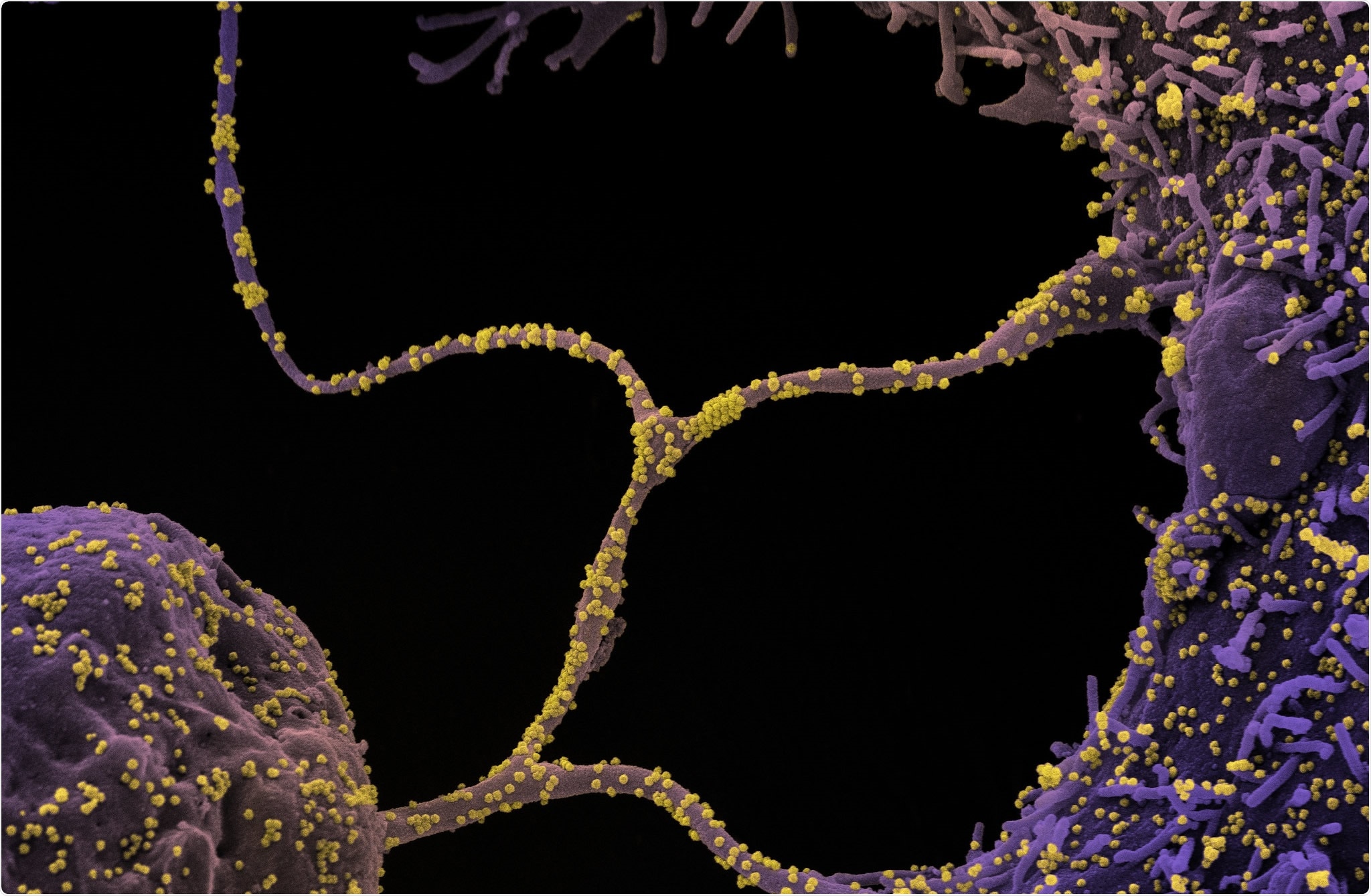
Study: Molecular dynamic simulation reveals E484K mutation enhances spike RBD-ACE2 affinity and the combination of E484K, K417N and N501Y mutations (501Y.V2 variant) induces conformational change greater than N501Y mutant alone, potentially resulting in an escape mutant. Image Credit: NIAID
As many variants of SARS-CoV-2 emerge and subsequently displace first-wave viruses, it is pivotal not only to appraise their relative transmissibility and virulence in causing coronavirus disease (COVID-19), but also their propensity to escape antibody neutralization. Of utmost interest are variants harboring mutations that can affect the interaction of the viral spike receptor-binding domain (S RBD) with the viral receptor on host cells, angiotensin-converting enzyme 2 (ACE2), which provides an entry point for the coronavirus. Variants with a greater binding affinity for ACE2 are likely to spread more. Furthermore, transmissibility is linked to mortality, as an inevitable increase in infection rates caused by the novel variants will result in higher disease and death toll.
However, these dire repercussions of more rapid and widespread infections can also be compounded by a loss of efficacy of currently available antibody-based treatments and vaccines and a decrease of protective immunity in individuals previously infected with a ‘first wave’ virus.
In order to improve our understanding of the risks posed by an individual or combined mutations in these ‘second wave’ variants, a research group from ImmunityBio company in California conducted a computational analysis of interactions of the S RBD with human ACE2.
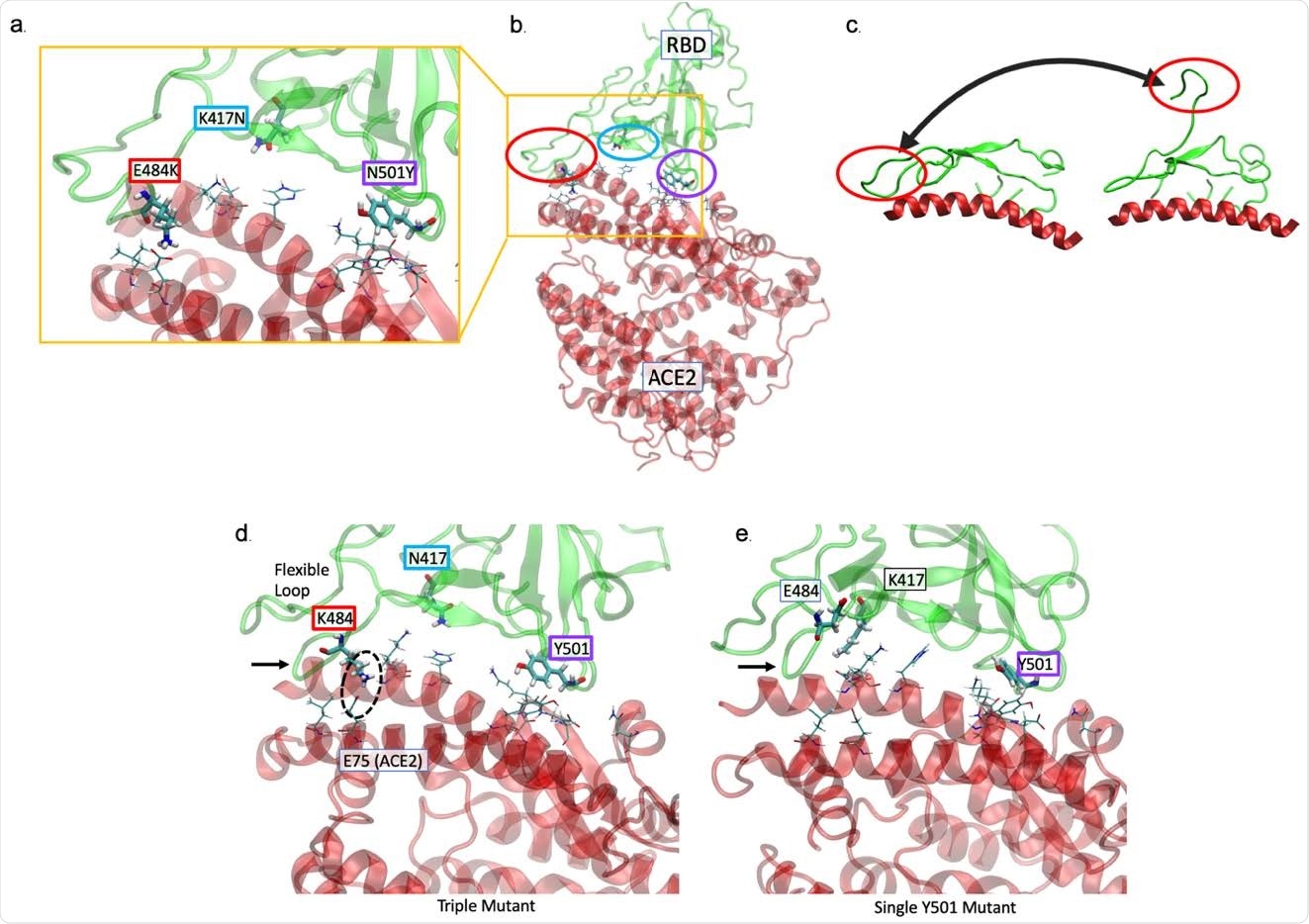
The K484 substitution in the novel South African variant increases affinity of the spike receptor-binding domain (S RBD) for ACE2. (a, b) The positions of the E484K (red), K417N (cyan), and N501K (purple) substitutions at the interface of the 501Y.V2 variant S RBD – hACE2 interface are shown. hACE2 residues nearest to the mutated RBD residues are rendered as thin sticks. The E484K mutation is located in a highly flexible loop region of the interface, K417N in a region with lower probability of contact, and N501K at a second point of high-affinity contact. (c) The range of movement available to the loop containing residue 484 is shown by PCA of MD simulation of a first-wave sequence11,13. (d) MD simulation performed in the presence of all 3 substitutions reveals the loop region is tightly associated (black arrow) with hACE2. A key contact ion pair is circled. (e) In comparison to K484, when E484 (‘wildtype’) is present with only the Y501 variant, the loop is not as tightly associated (arrow).
In this study, the researchers have utilized millisecond-scale MD simulation methods to investigate mutations (E484K, K417N, and N501Y) at the S RBD-ACE2 interface in the rapidly spreading South African variant 501Y.V2 – and their effects on RBD binding affinity and spike glycoprotein conformation. The wild-type ACE2/RBD complex was built from the cryo-electron microscopy structure. Moreover, ten copies of each RBD mutant were minimized, equilibrated and simulated, and the minimization processed occurred in two phases.
Finally, principal component analysis (PCA) was pursued by using the full set of simulations of the triple mutant, E484K and N501Y systems. Simulation structures were extrapolated onto the eigenvectors for every mutation system.
The great escape from neutralization
The study revealed greater affinity of K484 S RBD for ACE2 in comparison to E484, as well as the greater probability of modified conformation when compared to the original structure. This may actually represent mechanisms by which the new 501Y.V2 viral variant was able to replace original SARS-CoV-2 strains.
More specifically, both E484K and N501Y mutations were shown an increase affinity of S RBD for human ACE2 receptor, while E484K was able to switch the charge on the flexible loop region of RBD, resulting in the formation of novel favorable contacts. The aforementioned improved affinity is a likely culprit for more rapid spread of this variant due to greater transmissibility, which is a prime reason why it is important to track these mutations and act in a timely manner. Furthermore, the induction of conformational changes is responsible for the escape of the 501Y.V2 variant (distinguished from the B.1.1.7 UK variant by the presence of E484K mutation) from neutralization by existing anti-SARS-CoV-2 antibodies and re-infect COVID-19 convalescent individuals.
Implications for further vaccine design
“We believe the MD simulation approach used here similarly represents a tool to be used in the arsenal against the continuing pandemic, as it provides insight into the likelihood mutations alone or in combination may have effects that lessen the efficacy of existing therapies or vaccines”, say the authors of this study.
“We suggest vaccines whose efficacies are largely dependent upon humoral responses to the S antigen only are inherently limited by the emergence of novel strains and dependent upon frequent re-design,” they add.
On the other hand, a vaccine that evokes a vigorous T-cell response is much less subject to changes due to accruing mutations and, thus, provides a better and more efficient approach to protection against this disease.
Finally, the ideal vaccine would also incorporate a second, conserved antigen (such as the SARS-CoV-2 nucleocapsid protein), which would likely elicit an effective humoral and cell-mediated immune response – even when confronted with a rapidly changing virus.
*Important Notice
bioRxiv publishes preliminary scientific reports that are not peer-reviewed and, therefore, should not be regarded as conclusive, guide clinical practice/health-related behavior, or treated as established information.
expert reaction to the South African variant

Several journalists have asked us about the South African variant of SARS-CoV-2, so here are some comments from scientists.
Dr Julian W Tang, Honorary Associate Professor/Clinical Virologist at the University of Leicester, said:
“The South African variant (B.1.351 or 501Y.V2) differs significantly from the UK B.1.1.7(variant) in several ways that may impact on vaccine effectiveness. “Both variants share the N501Y mutation in the viral S gene which lies in the receptor binding domain (RBD) – where the virus binds to the host cell – and where vaccine-induced antibodies bind to the virus. But the South African variant has two more mutations – E484K and K417N – in this RBD region that are absent in the UK variant.
These two additional mutations may interfere more with vaccine effectiveness in the South African variant than in the UK variant.
“This does not mean that the existing COVID-19 vaccines will not work at all, just that the antibodies induced by the current vaccines may not bind and neutralise the South African variant as well as it would the other circulating viruses – including the UK variant.
“Even if the South African variant becomes more widespread and dominant, the mRNA (Pfizer-BioNTech and Moderna) and adenovirus-vectored (Oxford-Astrazeneca and Russian Sputnik V) vaccines can be modified to be more close-fitting and effective against this variant in a few months.
“Meanwhile, most of us believe that the existing vaccines are likely to work to some extent to reduce infection/ transmission rates and severe disease against both the UK and South African variants – as the various mutations have not altered the S protein shape that the current vaccine induced antibodies will not bind at all.”
Prof Francois Balloux, Professor of Computational Systems Biology and Director, UCL Genetics Institute, University College London, said:
“The ‘South African variant’ carries a mutation in the spike protein called E484K, which is not present in the ‘UK strain’. The E484K mutation has been shown to reduce antibody recognition. As such, it helps the virus SARS-CoV-2 to bypass immune protection provided by prior infection or vaccination. It is not anticipated that this mutation is sufficient for the ‘South African’ variant to bypass the protection provided by current vaccines. It’s possible that new variants will affect the efficacy of the covid vaccines, but we shouldn’t make that assumption yet about the South African one.”
Prof Lawrence S. Young, Virologist and Professor of Molecular Oncology, Warwick Medical School, University of Warwick, said:
“The South African virus variant was recently reported in a preprint ahead of formal publication. The variant has multiple spike mutations and emerged in a major metropolitan area in South Africa following the first wave of the epidemic and then spread to multiple locations within two other neighbouring provinces. It has rapidly spread become the dominant virus variant in the Eastern and Western Cape provinces.
“The South African variant has 3 mutations at key sites in the receptor binding domain (K417N, E484K and N501Y) of the spike gene. Two of these (E484K and N501Y) are within the receptor-binding motif (RBM), the main functional motif that forms the interface with the human ACE2 receptor. The N501Y mutation is the same as that found in the UK virus variant.
These changes are consistent with both these variants being more infectious (transmissible) but we don’t know whether they will affect the disease severity. While changes in the UK variant are unlikely to impact the effectiveness of current vaccines, the accumulation of more spike mutations in the South African variant are more of a concern and could lead to some escape from immune protection. “Variants of SARS-CoV-2 have been around since the beginning of the pandemic and are a product of the natural process by which viruses develop and adapt to their hosts as they replicate. Most of these mutations have no effect on the behaviour of the virus but very occasionally they can improve the ability of the virus to infect and/or become more resistant to the body’s immune response. Many thousands of these mutations have already been identified in isolates of the virus with around 4000 spike mutations being found in different viruses from around the world. The UK and South African virus variants have changes in the spike gene consistent with the possibility that they are more infectious.
“But the standard measures to restrict transmission (hands, face, space) will prevent infection with this variant. Along with improved surveillance (testing, tracing and isolating) and expediating the roll out of the vaccine, these measures will prevent transmission of this variant and any others that will arise. “The move to harsher levels of restriction across the country is inevitable. It is essential that we do everything possible to prevent the South African variant from spreading to the UK population. Quarantine measures and restricting travel from and to South Africa are imperative.”
Dr Simon Clarke, Associate Professor in Cellular Microbiology at the University of Reading, said:
“The variant found in South Africa which is now also seen in the UK, is another mutated version of the coronavirus which is causing significant problems.
“The South African variant has a number additional mutations including changes to some of the virus’ spike protein which are concerning. They cause more extensive alteration of the spike protein than the changes in the Kent variant and may make the virus less susceptible to the immune response triggered by the vaccines. “While it is more infectious, it currently remains unclear whether it causes a more severe form of the disease. Moreover, the South African variant is a more difficult virus to track as it lacks some mutations in the spike found in the Kent virus which make it easily detectable by the PCR test used by the NHS.”
Prof James Naismith, Director of the Rosalind Franklin Institute, and University of Oxford, said:
“Viruses mutate and new strains will emerge. The so-called South African strain has a number of changes, and scientists are working flat out to understand their significance. Some of the changes are quite significant and thus scientists are paying a lot of attention. We do not yet know enough to say more than this. “For the general public, I would say think about our human nature. Many of us like a good scare and horror stories are part and parcel of human culture, which means such things get a lot of coverage. However a drumbeat of nightmare scenarios about this new variant does nothing but create anxiety because too little is known and there is nothing we can do about it at the moment. Prolonged anxiety is far from enjoyable and leads to mental illness. I would say there are many much more positive things we can do. “We can support scientists to work on the new variants and keep other research efforts to treat the disease going (don’t stop funding covid19 science just yet). We can all help if we redouble our efforts to wash our hands, wear a mask and socially distance. The faster and further the vaccine is rolled out, the quicker the end to this nightmare. We can all help each other through kindness and understanding, many are grieving, others are financially very stretched and other are very lonely. We can help by not amplifying or spreading doomsday scenarios or spreading magical thinking or nonsense information. “And we need to have a proper informed debate: further social restrictions are required if we wish to avoid overloading the NHS before the vaccines stop spread. Those who advocate reducing social restrictions really should make clear the costs in lives of their policy. In our democracy we elect politicians, not scientists, to take decisions. We expect politicians to make decisions based on facts, not fantasy.”
All our previous output on this subject can be seen at this weblink:
www.sciencemediacentre.org/tag/covid-19