Germany has recorded its biggest daily increase in coronavirus cases in more than three months as European countries struggle to curb a surge in infections. More than 1,200 cases were reported in Germany in the past 24 hours. Officials said the rise was due, in part, to people returning from holidays. It came as Germany warned against non-essential trips to parts of Spain. Meanwhile, France had 2,524 new cases in 24 hours, the highest daily rise since its lockdown was lifted in May. The German foreign ministry said it had added a partial travel warning to the Spanish capital Madrid and the Basque region on Tuesday amid rising infections there. Warnings were already in place for the regions of Aragon, Catalonia and Navarra. Germany has recorded more than 9,000 coronavirus-related deaths since the pandemic began. Spain is facing the worst coronavirus infection rate in Western Europe. It recorded 1,418 new infections in its latest daily count on Tuesday and said there were 675 “active outbreaks” in the country. Salvador Macip, an expert in health sciences at Catalonia’s Open University, told AFP news agency the country was at a “critical moment”. “We are right at a point where things can get better or worse. This means we have to pull out all the stops to curb outbreaks before they become more serious,” he said. In total, Spain has recorded more than 326,000 cases – the highest number in Western Europe and the 11th highest in the world. Wearing a face mask became compulsory in all public areas in Brussels on Wednesday amid a rise in cases. The order applies to those aged 12 and above. People were previously only required to wear masks in crowded public spaces and enclosed areas of the Belgian capital, such as shopping centres. Authorities said the enhanced rules were introduced because of a rise in infections, with Brussels recording an average of 50 new cases per 100,000 inhabitants per day over the past week. Police checks are being ramped up to ensure that people follow the new rules. The mask-wearing regulation is one of the strictest currently in place in Europe. Belgium has recorded more than 75,000 cases of coronavirus and more than 9,800 deaths, according to data collated by Johns Hopkins University. This year’s Paris marathon has been cancelled as France battles a spike in coronavirus cases, organisers said on Wednesday. The marathon was originally due to take place on 5 April but was then postponed to 15 November because of the pandemic. Organisers said they had “tried everything to maintain the event” but felt “obliged” to call it off. “There will be great disappointment among those who have sacrificed time training for what had become an autumn marathon,” they said. Organisers are now working on the 2021 marathon. The announcement came after Paris became the latest French city to make face masks compulsory in busy outdoor areas. Face masks were already compulsory nationwide in enclosed public spaces. A government spokesman on Wednesday said France would gradually ramp up police checks to ensure that people were respecting social distancing and wearing masks where required. “We’re at a tipping point… We’re going to mobilise polices forces to make checks,” Gabriel Attal told journalists. France has now recorded a total of 206,696 cases of the virus.
America’s flying blind on its coronavirus response
A month after the Trump administration changed how hospital data is reported, the public release of this data “has slowed to a crawl,” the Wall Street Journal reports.
The big picture: This is the latest example of how the world’s wealthiest country just can’t get it together.
Testing and case data — which tell the story of where people are getting sick — have been a problem for the last six months. This latest fiasco blurs the picture of how many people are getting very sick at a given time, which until now has been a more reliable measure of the pandemic.
Driving the news: The Department of Health and Human Services last month ordered states to report coronavirus hospitalization data directly to the agency, rather than to the Centers for Disease Control and Prevention, as they’d been doing.
- Now, important data, like the number of beds occupied by coronavirus patients, is lagging by a week or more.
- The implications go beyond tracking the virus. Hospitalization data is also used by agencies to determine where to send remdesivir and personal protective equipment.
What they’re saying: “The transition has been a disaster,” Jeffrey Engel, senior adviser to the Council of State and Territorial Epidemiologists, told the WSJ. “What HHS said was that the CDC was not nimble enough and couldn’t handle new data elements, and that’s simply not true.”
The other side: HHS officials told the WSJ that the new system has a more complete set of data, but that the quality-control process has led to some delays as the new system gets up and running.
The bottom line: We’re doing a terrible job handling the pandemic, at least relative to other wealthy countries. The fact that we don’t have a good idea of what’s happening in real time – and it’s getting worse — is one of the major contributors to that failure.
Quinine in Tonic Water: There is always a way!
everybody has an opinion and a asshole
Nick Bit: When I first arrived on the tropics on my Yacht, I ran across an Englishman who had lived on the islands for years. He came to me at the local Yacht club and introduced himself. Then he sat down at my table ordered himself a Gin and tonic on my tab. His name was Goeff and he owned a company called Marine Services. The Local Chandelier and Haul out facility.
He said you are new to the tropics and I asked him how do you know? He said because you have barnacles on your water line from cold waters and you’re still white. He said there are two things you need in the tropics… And he handed me a captains hat so the sun did not burn my scalp and a gin and tonic. He told me to drink Quinine water every day so I did not get Malaria.
So for over 20 years in the tropics I wore a captains hat and I still drank a liter of Schweppes Quinine water every day with lemon and fruits. For ten years I added Hydroxychloroquine tablet once a week. I never got Malaria and I never got the Plague… Knock on wood! But I can’t tell you if the shit works or not. There is plenty of debate!
Geoff and I became good friends and I sold him the Yacht on terms when I purchased a bigger one.
And I still drink Quinine water every day and have my pills but this time because of the plague.
Quinine in Tonic Water: What Is It and Is It Safe?
Medically reviewed by Natalie Butler, RD, LD — Written by James Roland — Updated on September 18, 2018
Quinine is a bitter compound that comes from the bark of the cinchona tree. The tree is most commonly found in South America, Central America, the islands of the Caribbean, and parts of the western coast of Africa. Quinine was originally developed as a medicine to fight malaria. It was crucial in reducing the death rate of workers building the Panama Canal in the early 20th century.
Quinine, when found in small doses in tonic water, is safe to consume. The first tonic waters contained powdered quinine, sugar, and soda water. Tonic water has since become a common mixer with liquor, the most well-known combination being gin and tonic.
The U.S. Food and Drug Administration (FDA) allows tonic water to contain no more than 83 parts per million of quinine, because there can be side effects from quinine.
Today, people sometimes drink tonic water to treat nighttime leg cramps associated with circulatory or nervous system problems. However, this treatment is not recommended. Quinine is still given in in small doses to treat malaria in tropical regions.
Quinine’s primary benefit is for the treatment of malaria. It’s not used to prevent malaria, but rather to kill the organism responsible for the disease. When used to treat malaria, quinine is given in a pill form.
Quinine is still in tonic water, which is consumed around the world as a popular mixer with spirits, such as gin and vodka. It’s a bitter beverage, though some manufacturers have tried to soften the taste a little with added sugars and other flavors.
Quinine in tonic water is diluted enough that serious side effects are unlikely. If you do have a reaction, it may include:
- nausea
- stomach cramps
- diarrhea
- vomiting
- ringing in the ears
- confusion
- nervousness
However, these are more common side effects for quinine taken as a medication. Among the most serious potential side effects associated with quinine are:
- bleeding problems
- kidney damage
- abnormal heartbeat
- severe allergic reaction
Keep in mind that these reactions are primarily linked to quinine, the medication. You would have to drink about two liters of tonic water a day to consume a day’s dose of quinine in pill form.
If you’ve had a bad reaction to tonic water or quinine in the past, you should not try it again. You may also be advised against taking quinine or drinking tonic water if you:
- have an abnormal heart rhythm, especially a prolonged QT interval
- have low blood sugar (because quinine can cause your blood sugar to drop)
- are pregnant
- have kidney or liver disease
- are taking medications, such as blood thinners, antidepressants, antibiotics, antacids, and statins (these medications may not preclude you from taking quinine or drinking tonic water, but you should tell your doctor about these and any other medications you take if you’re prescribed quinine)
While a gin and tonic and vodka and tonic are staples at any bar, tonic water is becoming a more versatile beverage. It’s now mixed with tequila, brandy, and just about any other alcoholic beverage. Citrus flavors are often added, so if you see the term “bitter lemon” or “bitter lime,” you know the drink includes tonic water with a sour fruit flavor added.
However, tonic water isn’t just used to mix with spirits. Chefs may include tonic water in batter when frying seafood or in desserts that also include gin and other liquors.
If tonic water is your mixer of choice, you’re probably safe to have a little now and then. But don’t drink it thinking it will cure nighttime leg cramps or conditions such as restless leg syndrome. The science isn’t there for tonic water or quinine to treat these conditions. See a doctor instead and explore other options. But if you’re traveling to a part of the world where malaria is still a threat, ask about the use of quinine to treat the disease if you’re unfortunate enough to contract it.
References Below
Continue reading “Quinine in Tonic Water: There is always a way!”
Florida’s Covid-19 cases in children have increased 137% in past month
Though Police Prmo:
Reality from a front line teacher:
(CNN)Florida’s number of official Covid-19 cases in children has more than doubled over the past month, data from the state showed Tuesday. There has been a 90% increase in Covid-19 cases in US children in the last four weeks, report says Covid-19 cases among children also spiked across the country during roughly the same period. In Florida, the total number of cases in children 17 and under rose from 16,797 on July 9 to 39,735 on August 9 — an increase of 137%, according to Florida Department of Health data. Covid-19 hospitalizations among children in Florida rose from 213 to 436 during that same period, a 105% increase. Deaths among children rose from four to seven in Florida during that period. Across the country, the total number of Covid-19 cases among children rose from 179,990 on July 9 to more than 380,000 on August 6 — an increase of about 90% — according to a report published Monday by the American Academy of Pediatrics and the Children’s Hospital Association. Some of the increase might be due to more testing, AAP said. That report came as recent studies suggest children could play an important role in transmission of the virus.
The coronavirus is mutating. Now what?
D614G mutation is characterized by aspartic acid to glycine shift at the amino acid position 614 of a protein. Recent studies have shown that D614G mutation in the spike protein of novel coronavirus makes it more infectious, transmissible, and deadly.
What is D614G mutation?
A genetic mutation is characterized by a permanent change in the DNA sequence that may occur due to environmental factors (UV radiation), or due to an error during DNA replication process. Genetic mutations can be of many types, including missense, nonsense, insertion, deletion, duplication, frameshift, and repeat expansion mutations. D614G mutation is a missense mutation wherein an alteration in single DNA base pair causes the substitution of aspartic acid (single-letter code: D) with glycine (single-letter code: G) in the protein encoded by the mutated gene. The RNA codons that codes for aspartic acid and glycine are designed as GAU/GAC and GGU/GGC, respectively. Thus, a single mutation in the RNA codon causing A to G shift can lead to aspartic acid to glycine shift in the peptide sequence of the target protein. Glycine is a nonpolar amino acid with a single hydrogen atom as its side chain; whereas, aspartic acid is a polar amino acid with an acidic side chain. Given the substantial difference between the basic nature of these amino acids, D614G mutation is expected to have significant biological implications.
What are the implications of D614G mutation in the spike protein of novel coronavirus?
In general, viruses can undergo frequent genetic mutations because of several factors, such as natural selection and random genetic drifts. Because these factors can work sequentially, it is often very difficult to identify when a viral mutation becomes more prevalent.
In the case of a novel coronavirus, D614G mutation in the viral spike protein occurred at the initial stage of the pandemic, and recent evidence suggests that viruses containing glycine residue at position 614 have now become the most prevalent variant globally.
To identify the causative factors responsible for the rapid emergence of G614 containing coronavirus, scientists have extensively monitored all coronavirus genome sequencing data that are available globally at the Global Initiative for Sharing All Influenza Data (GISAID) database. Using suitable bioinformatic methods, scientists have found that G614G mutation in the viral spike protein is the most frequently occurring mutation across many geographical locations. As pseudotyped viruses,
G614 variants have considerably higher infectious titers than D614 variants. This indicates that spike D614G mutation makes the novel coronavirus more infectious and that the virus can be transmitted more easily and rapidly from person to person.
Moreover, scientists have shown that people infected with the G614 variant have higher viral RNA load in the upper respiratory tract than those infected with the D614 variant. However, D614G mutation is not associated with increased disease severity. Because D614G mutation is located in the interface between neighboring spike protein protomers, it may modulate protomer-protomer interaction by disrupting between-protomer hydrogen bond formation. Interestingly, one study conducted on pseudoviruses containing either D614 or G614 has claimed that G614 containing viruses are more susceptible to convalescent sera-mediated neutralization. This finding indicates that D614G mutation does not facilitate the virus escaping host immune responses.
Is spike D614G mutation associated with higher mortality?
Although there is no evidence showing that D614G mutation is associated with increased COVID-19 severity, a recent study using a phylogenetic tree of more than 4000 coronavirus genomes has claimed that viruses containing D614G mutation are more virulent, and thus, are associated with higher disease-related mortality. The study has speculated that higher viral pathogenicity may be due to mutation-mediated conformational changes in the spike protein, which facilitate the exposure of polybasic cleavage site to cellular proteases.
Could D614G mutation impact vaccine development?
The spike protein gets a lot of attention from the host immune system as it is located on the outer surface of the virus (external protein). Thus, spike D614G mutation is expected to play a major role in modulating the viral ability to escape vaccine-induced immune responses.However, there is evidence suggesting that the possibility of D614G mutation affecting the vaccine efficacy is very less. Because the mutation is not in the receptor-binding domain of the spike protein, it is less likely to affect the ability of the domain to induce host immune responses, which is believed to be a prerequisite for antibody-mediated neutralization of the virus. Moreover, a large portion of ongoing vaccines are developed against the receptor-binding domain, and thus, D614G mutation is not supposed to have any effect on vaccine efficacy. Another important observation is that convalescent sera obtained people infected with D614 containing viruses have been found to neutralize viruses containing G614, and vice versa. This indicates that D614G mutation does not alter antibody-mediate immune responses.
Donald Trump: College Football ‘Making a Tragic Mistake’ if It Cancels Season for Coronavirus
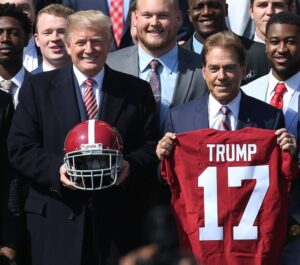
President Donald Trump said Tuesday that college football conferences were making a terrible mistake by preparing to cancel their season during the coronavirus pandemic.“I think football’s making a tragic mistake,” he said. The president commented in an interview with Fox Sports Radio host Clay Travis after reports signaled that the Big Ten and Pac-12 conferences were prepared to cancel their seasons. No final decisions have been made. The president noted that a “tiny percentage” of people with coronavirus got seriously ill, stressing that this included primarily the elderly rather than healthy athletes. “These football players are very young, strong people. Physically they’re in extraordinary shape, so they’re not going to have a problem,” Trump said. “You’re not going to see people dying.” The president joked that some of the linemen in football might have a little extra body fat, and also joked about his own age and weight “Isn’t it wonderful that I am a perfect physical specimen?” he joked. “So great.” The president recalled personally attending the NCAA College Football Playoff national championship game in January 2020 between Louisiana State University (LSU) and Clemson University of South Carolina, and an LSU game against Alabama in November. “When I went to that game it was incredible. I went to a couple of them,” he said. “And I never really did the big-time college football. I went to an Ivy League school. It wasn’t really quite the same.” He recalled the “massive” stadiums for college football, noting he was impressed by crowds that were even larger than the NFL. It’s brilliant football. It’s great football, the atmosphere. There’s nothing like it,” he said.He said that college football would likely be affected by the loss of the huge crowds. “You can’t have empty seats,” Trump said. “I’m not sure college football can do it, but we’ll have to see.”
Radio Free Wall Street
Boiling The Frogs
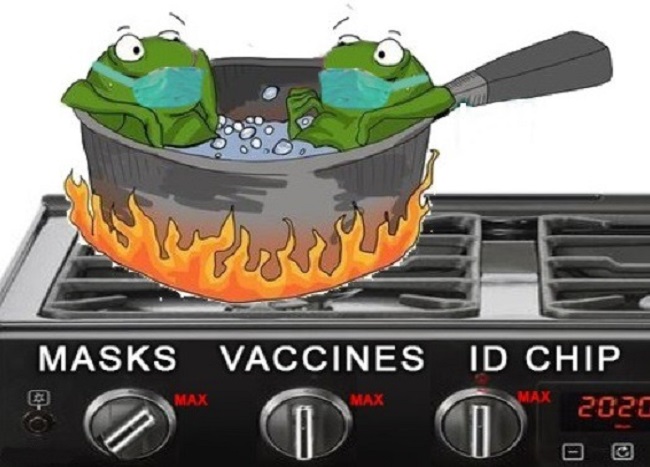
Critical information about what is really going on with the virus, the vaccine, the happy checks and the mail in elections.
Russia clears virus vaccine despite scientific skepticism
MOSCOW (AP) — Russia on Tuesday became the first country to clear a coronavirus vaccine and declare it ready for use, despite international skepticism. President Vladimir Putin said that one of his daughters has already been inoculated. Putin emphasized that the vaccine underwent the necessary tests and has proven efficient, offering a lasting immunity from the coronavirus. However, scientists at home and abroad have been sounding the alarm that the rush to start using the vaccine before Phase 3 trials — which normally last for months and involve thousands of people — could backfire. Speaking at a government meeting Tuesday, Putin said that the vaccine has undergone proper testing and is safe. “I know it has proven efficient and forms a stable immunity, and I would like to repeat that it has passed all the necessary tests,” he said. “We must be grateful to those who made that first step very important for our country and the entire world.” The Russian leader added that one of his two adult daughters has received two shots of the vaccine. “She has taken part in the experiment,” Putin said. Putin said that his daughter had a temperature of 38 degrees Celsius (100.4 Fahrenheit) on the day of the first vaccine injection, and then it dropped to just over 37 degrees (98.6 Fahrenheit) on the following day. After the second shot she again had a slight increase in temperature, but then it was all over. “She’s feeling well and has high number of antibodies,” Putin added. He didn’t specify which of his two daughters — Maria or Katerina — received the vaccine. The Health Ministry said in Tuesday’s statement that the vaccine is expected to provide immunity from the coronavirus for up to two years. Putin emphasized that vaccination will be voluntary, Russian authorities have said that medical workers, teachers and other risk groups will be the first to be inoculated. Deputy Prime Minister Tatyana Golikova said that the vaccination of doctors could start as early as this month. Professor Alexander Gintsburg, head of the Gamaleya Institute that developed the vaccine, said that vaccination will start while the Phase 3 trials continue. He said that initially there will be only enough doses to conduct vaccination in 10-15 of Russia’s 85 regions, according to the Interfax news agency. Russian officials have said that large-scale production of the vaccine will start in September, and mass vaccination may begin as early as October. Russia has registered 897,599 coronavirus cases, including 15,131 deaths. When the pandemic struck Russia, Putin ordered state officials to shorten the time of clinical trials for potential coronavirus vaccines. Becoming the first country in the world to develop a vaccine was a matter of national prestige for the Kremlin as it tries to assert the image of Russia as a global power. State television stations and other media have praised scientists working on it and presented the work as the envy of other nations. Gintsburg raised eyebrows in May when he said that he and other researchers tried the vaccine on themselves. Human studies started June 17 among 76 volunteers. Half were injected with a vaccine in liquid form and the other half with a vaccine that came as soluble powder. Some in the first half were recruited from the military, which raised concerns that servicemen may have been pressured to participate. Amid Russia’s rush to become the first to create a vaccine, the U.S., Britain and Canada last month accused Russia of using hackers to steal vaccine research from Western labs. As the trials were declared completed, questions arose about the vaccine’s safety and effectiveness. Some experts scoffed at Russian authorities’ assurances that the vaccine drug produced the desired immune response and caused no significant side effects, pointing out that such claims need to be backed by published scientific data. The World Health Organization said all vaccine candidates should go through full stages of testing before being rolled out. Experts have warned that vaccines that are not properly tested can cause harm in many ways — from a negative impact on health to creating a false sense of security or undermining trust in vaccinations.
Radio Free Wall Street
People Are Rioting In The Streets
This is something that one should not ignore. It’s a danger sign and an omen of what’s coming. In Lebanon, they’re burning down the banks. You are seeing a worldwide colossal failure of leadership.
At Least 97,000 Children in the U.S. Tested Positive in Last 2 Weeks of July
Trump’s unilateral economic relief actions come under fire. Ohio’s governor urges use of rapid tests, but with caution after his false positive.At least 97,000 children in the United States tested positive for the coronavirus the last two weeks of July alone, according to a new report from the American Academy of Pediatrics and the Children’s Hospital Association. The report says that at least 338,000 children have tested positive since the pandemic began, meaning more than a quarter have tested positive in just those two weeks. The report comes as parents and education leaders grapple with the challenges of resuming schooling as the virus continues to surge in parts of the country. More than seven out of 10 infections were from states in the South and West, according to the report, which relied on data from 49 states along with Washington, D.C., Puerto Rico and Guam. The count could be higher because the report did not include complete data from Texas and information from parts of New York State outside of New York City. Missouri, Oklahoma, Alaska, Nevada, Idaho and Montana were among the states with the highest percent increase of child infections during that period, according to the report. New York City, New Jersey and other states in the Northeast, where the virus peaked in March and April, had the lowest percent increase of child infections, according to the report. In total, 338,982 children have been infected, according to the report. Not every locality where data was collected categorized children in the same age range. Most places cited in the report considered children to be people no older than 17 or 19. In Alabama, though, the age limit was 24; in Florida and Utah the age limit was 14. The report noted that children rarely get severely sick from Covid-19, but another report, from the Centers for Disease Control and Prevention, highlighted how the threat from a new Covid-19-related condition, called Multisystem Inflammatory Syndrome in Children or MIS-C, has disproportionately affected people of color. The C.D.C. said that from early March through late July, it received reports of 570 young people — ranging from infants to age 20 — who met the definition of MIS-C. Most of those patients were previously healthy, the report said. About 40 percent were Hispanic or Latino; 33 percent were Black and 13 percent were white, the report said. Ten died and nearly two-thirds were admitted to intensive care units, it said. Symptoms include a fever, rash, pinkeye, stomach distress, confusion, bluish lips, muscle weakness, racing heart rate and cardiac shock. A reopened high school in Georgia that drew national attention over images of its crowded hallways has had at least nine coronavirus cases reported in the last week, and is switching to online-only instruction for at least the next two days while the school is disinfected and officials assess the situation. “At this time, we know there were six students and three staff members who were in school for at least some time last week who have since reported to us that they have tested positive,” Gabe Carmona, the principal of North Paulding High School in Dallas, Ga., said in a letter to parents and guardians of the school’s students on Saturday. The superintendent of the Paulding County School District, Brian Otott, sent them another letter Sunday advising them about the switch to online instruction for Monday and Tuesday, at the least. Both letters encouraged parents to check their children’s temperature twice daily and to monitor them for symptoms. Neither letter made any mention of social distancing or wearing masks, which the school has said are encouraged but not mandatory But Dr. Gary Voccio, the health director for Paulding County and nine other counties in Northwest Georgia, said that masks were crucial to containing the spread of the virus. “Of course you have to change classrooms, and it’s going to be very difficult to physically distance when that occurs,” Dr. Voccio said in a video posted on Facebook. “But the masks, again, are the important part of this problem. And we will have significant cases within the schools, I’m sure.” At least 66 new coronavirus deaths and 4,032 new cases were reported in Georgia on Saturday, according to a New York Times database.
His experience could raise concerns about how much states will rely on antigen tests to augment other forms of testing that are in short supply. Ohio is one of seven states that said this week that they were banding together to purchase a total of 3.5 million rapid coronavirus tests, including antigen tests, along with other vital supplies. Governor DeWine said on CNN Sunday that he had already been in touch with Gov. Larry Hogan of Maryland to talk about the tests and the seven-state agreement.
“If anyone needed a wake-up call with antigens, how careful you have to be, we certainly saw that with my test,” Governor DeWine said. “And we’re going to be very careful in how we use it.”
He added that he would direct any funding from a new federal relief package to expanded testing and helping schools adapt.
“We have doubled our testing in the last four weeks,” he said. “We need to double it again and then double it again. And so that is not going to be cheap to do.”
PCR tests are in short supply nationwide, and turnaround times for results have stretched past two weeks in some parts of the country, rendering the information useless.
Compared with PCR tests, Quidel’s antigen test is more likely to return a false negative result, missing up to 20 percent of cases that PCR detects, though the figure may drop below 5 percent for patients with high virus levels. But Governor DeWine’s antigen test produced the opposite error: a false positive.
He noted on Sunday that antigen tests function especially well as screening tests, delivering a quick preliminary indication that can be confirmed by the more accurate but slower PCR tests.
Virus cases have surged in the United States in recent weeks, particularly in the Sun Belt states and in communities where officials moved quickly to reopen. According to a New York Times database, the United States leads the world in confirmed cases with more than five million — a milestone reached on Saturday — followed by Brazil and India. Experts have warned that the actual number of people infected is far greater than the confirmed case count. Brazil also reached a milestone of 100,000 deaths on Saturday.
Trump’s moves on economic aid draw fire on the Sunday news shows.
Image
Administration officials struggled in television appearances on Sunday to explain President Trump’s attempts to circumvent Congress in the absence of an agreement on a coronavirus aid package, sowing further confusion over whether tens of millions of Americans will receive the promised relief.
The president announced executive steps on Saturday that he said were intended to address lapsed unemployment benefits, reinstate an eviction ban, provide relief for student borrowers and suspend collection of payroll taxes. They came after crucial benefits provided under earlier aid bills had lapsed, and after two weeks of talks between congressional Democrats and administration officials failed to yield an agreement on a broader relief package.
But Mr. Trump’s steps appeared unlikely to have a meaningful impact on the sputtering economy, raising questions about whether Mr. Trump had taken them mainly to gain more leverage in his face-off with Congress.
Democrats criticized the actions on Sunday as executive overreach, and warned that the nation’s social safety net could be jeopardized.
“The president’s meager, weak and unconstitutional actions further demand that we have an agreement,” Speaker Nancy Pelosi of California said on “Fox News Sunday.”
She, along with Senator Chuck Schumer of New York, the minority leader, urged administration officials to resume talks and seek a compromise on a broad relief package.
“The president’s executive orders, described in one word, could be paltry; in three words, unworkable, weak and far too narrow,” Mr. Schumer said on the ABC program “This Week.”
Mr. Trump’s top economic advisers were on the defensive Sunday about whether the president had the authority to bypass Congress, which retains the constitutional power of the purse, and redirect billions of dollars in spending. But there was some acknowledgment that the measures were not as potent as congressional action would be. “The downside of executive orders is, you can’t address some of the small business incidents that are there,” said Mark Meadows, the White House chief of staff, in a prerecorded interview that was broadcast Sunday on Gray Television. “You can’t necessarily get direct payments, because it has to do with appropriations. That’s something that the president doesn’t have the ability to do. So, you miss on those two key areas. You miss on money for schools. You miss on any funding for state and local revenue needs that may be out there.”


Continue reading “At Least 97,000 Children in the U.S. Tested Positive in Last 2 Weeks of July”