Fauci continues to contradict Trump on the severity of the Covid-19 pandemic

Dr. Anthony Fauci, the nation’s top infectious disease expert, continues to contradict President Trump on coronavirus, including sharing differing descriptions about the seriousness of the pandemic in the US. While President Trump has pushed to reopen schools and downplay the surge of cases, Fauci warned in a Wall Street Journal podcast yesterday that states with resurging coronavirus cases “should seriously look at shutting down.” Fauci later noted that states with spiking coronavirus cases still can contain them by pausing their reopening processes, rather than shutting down a second time. In an interview published earlier today, Fauci said he’s “trying to figure out” where President Trump got the number behind his claim that 99% of coronavirus cases were “harmless.” On July 4, Trump sought to downplay the surge in Covid-19 cases by falsely claiming that testing in the US shows 99% of cases “are totally harmless.”

“I’m trying to figure out where the President got that number,” Fauci said in an interview with the Financial Times, published Friday. “What I think happened is that someone told him that the general mortality is about 1%. And he interpreted, therefore, that 99% is not a problem, when that’s obviously not the case.”

Fauci told FT that he last saw Trump on June 2 at the White House, and hasn’t personally briefed him in at least two months.

Kudlow: Trump would not ‘tolerate’ another shutdown

Trump ‘absolutely disinclined’ to shut down economy if there is a second coronavirus outbreak, Kudlow says

President Trump is unlikely to shut down the U.S. economy again even if there is a resurgence coronavirus infections, according to senior White House economic adviser Larry Kudlow.

“The president is absolutely disinclined to shut down the economy, as is the vice president,” Kudlow said Monday during an interview on “America’s Newsroom.” “You know, I think shutting down the economy could be worse for our health than not shutting it down.”

Every U.S. state has started the process of phased reopening, easing stay-at-home guidelines and allowing business activity to resume. But fears of a resurgence in COVID-19 has sent stocks tumbling in recent days. Last week, the U.S. surpassed 2 million COVID-19 cases, according to Johns Hopkins University data. More than 113,000 individuals have died from the virus. Florida and Texas were among the states that saw coronavirus cases hit a new peak this weekend. In others, including California, infection counts neared their previous highs. Kudlow maintained that the spike in new cases is the byproduct of increased testing in the U.S. and are not indicative of a second wave of infections. The tally is ultimately still low, he said — and warned the sudden flare-up in cases may be something the U.S. needs to get used to, barring the creation of a vaccine or treatment. “These are relatively small bumps. They’re there, I’m not denying it,” he said. “We are testing at 100 times the rate we were a couple of months back in March. So you’re bound to uncover a lot more cases.” The economic toll from the outbreak of the virus and subsequent shutdown is also continuing to grow. Last week, the Labor Department said another 1.5 million Americans filed for first-time unemployment benefits. While it marks the 10th week in a row that applications have declined since peaking at the end of March, it’s still well above pre-crisis levels. In the three months since American life came to a grinding halt, more than 44 million Americans have lost their jobs.

The Organization of Economic Cooperation and Development said in its quarterly outlook published last week that a second virus outbreak, and another round of lockdowns, would inflict deep damage on a global economy already in the throes of the worst recession since the Great Depression.

The U.S. economy is expected to plunge by 7.3 percent this year before expanding by 4.3 percent in 2021. In the event of a second wave, the nation’s economy — the world’s largest — would likely shrink by 8.4 percent and grow by 1.9 percent next year, the OECD said. “By the end of 2021, the loss of income exceeds that of any previous recession over the last 100 years outside wartime, with dire and long-lasting consequences for people, firms and governments,” OECD chief economist Laurence Boone said in a statement.

More grim job losses as U.S. hits record high on new COVID cases

July 9 (Reuters) – As the number of new coronavirus cases in the United States rose to a single-day record, fresh government data on Thursday showed another 1.3 million Americans filed for jobless benefits, highlighting the pandemic’s devastating impact on the economy. More than 60,000 new COVID-19 infections were reported on Wednesday and U.S. deaths rose by more than 900 for the second straight day, the highest since early June. Florida on Thursday announced nearly 9,000 new cases and 120 new coronavirus deaths, a record daily increase in lives lost. Positive test rates reached a new daily high of 18%, up from 12%-13% two weeks ago. California and Texas, the most populous states, announced record increases in COVID deaths on Wednesday. The grim U.S. numbers come on top of extraordinarily high jobless figures, although they came in lower than economists had forecast. Initial unemployment claims hit a historic peak of nearly 6.9 million in late March. Although they have gradually fallen, claims remain roughly double their highest point during the 2007-09 Great Recession. With coronavirus cases rising in 41 of the 50 U.S. states over the past two weeks, according to a Reuters analysis, many states have had to halt and roll back plans to reopen businesses and lift restrictions. From California to Florida, beaches and bars have been ordered to close. Restaurants in Texas have been told they can have fewer diners. Earlier this week, President Donald Trump criticized his health agency’s recommendations for reopening schools in the fall as too expensive and impractical, insisting that all schools must open for classroom instruction. Vice President Mike Pence said on Wednesday the Centers for Disease Control and Prevention would issue a “new set of tools” next week. Many Americans cannot return to work if schools do not open for in-person learning, as they are a major source of childcare in the country. The CDC’s director, Robert Redfield, on Thursday defended the guidelines but gave no details on what the CDC was changing. “It’s not a revision of the guidelines. It’s just to provide additional information to help the schools be able to use the guidance that we put forward,” he told ABC’s “Good Morning America” program. “Our guidelines are our guidelines.” Officials in New Jersey and New York, the hardest-hit states at the outset of the U.S. outbreak, are trying to preserve the progress they made in curtailing the spread of the virus in the face of the resurgence elsewhere, especially the South and West. New Jersey adopted a stringent coronavirus face-mask order on Wednesday, and New York City unveiled a plan to allow public school students back into classrooms for just two or three days a week.

WHO: COVID-19 still out of control in most countries

World Health Organization (WHO) Director General Dr Tedros Adhanom Ghebreyesus warned on Thursday that the coronavirus pandemic is still out of control in most countries, APA reports. “We know that when countries take a comprehensive approach based on fundamental public health measures, find, isolate, test and treat cases, and trace and quarantine contacts, the COVID-19 outbreak can be brought under control,” Dr Tedros stated. “But in most of the the virus is not under control. It is getting worse,” he added and called on the global community to learn from the few countries that have managed to bring the coronavirus under control. Since the virus was first registered in China in late 2019, over 12 million cases were confirmed worldwide, out of which more than 3 million were reported in the United States.

LA Mayor Warns Of Possible New Stay-At-Home Order

Los Angeles City Coronavirus Update: Mayor Eric Garcetti “All Options” On Table

  • Los Angeles County Coronavirus Update: New Cases, Hospitalizations Now Regularly Averaging Close To All-Time Record As Test Positivity Rate Soars Again
  • UK’s Largest Cinema Chain Odeon Slows Reopening Amid Moving Film Slate
  • Los Angeles Mayor Eric Garcetti Warns Of “National Testing Emergency” Across The U.S.

Noting that Los Angeles is currently seeing the highest level of hospitalizations since the pandemic began, Garcetti warned, “These [next two] weeks are absolutely critical. Critical to whether our schools open, whether our economy thrives.” He reminded residents that “All options remain on the table. We will do whatever we need to.” If things get worse, said Garcetti, “We’d likely return to a mandated stay-at-home order,” in one or two weeks. “There are still too many social gatherings. Way too many pool parties,” he said. “Parents, I need your help,” enjoined the mayor. “I need you to keep your children away from their friends.” As a general guideline, Garcetti advised, “You should assume that everyone around you is infected.” “Testing remains a critical tool,” he said. “We hear very single day that there are not enough tests,” said the mayor, before announcing that the city and county had performed a record 20,000 tests on Wednesday. But in a city of 4 million people, however, that’s still not enough. “We need more help with testing,” he said.

“Without a major boost in testing,” continued the mayor, “there’s no way we can safely reopen our economy or to safely reopen schools.”

He then called for federal help: “Congress and the president need to step up and pass another aid bill.”For those concerned that the city and county are only doing 20,000 tests a day, “Don’t be that scared by those numbers,” said Garcetti, “and I’ll tell you why: We saw two weeks ago that we had capacity, but no demand.” Now, Garcetti says, with increased demand, “I’m confident that within the next week we’ll get back to whatever path we need to [be on].” But there is an even larger crisis looming, according to the mayor. “We’re going to see across this nation a testing emergency,” said Garcetti in response to a question from Deadline. He predicted a national squeeze on lab personnel, testing materials and contact tracing. He called on Congress to approve another round of economic support for Americans. “We need national leadership, so this isn’t a dog-eat-dog [process],” said Garcetti. If states are pitted against each other again, as they were in the scramble for PPE then, said Garcetti, it becomes a zero-sum equation: “If Florida does well, California suffers,” and so on. Earlier in the day, the Los Angeles County Department of Public Health on Tuesday confirmed 4,015 new cases of COVID-19, the region’s highest number of new cases reported since the pandemic began. The high number of cases is due, in part, to a backlog of about 2,000 test results received from one lab that just submitted lab results from July 2-5 today. Testing results are available for more than 1.2 million individuals with 9% of those people testing positive. The daily positivity rate of all tests — a composite of a seven-day rolling average — has risen to 11.6%. On Monday, that seven-day average was pegged at 10%. A back of the envelope calculation shows L.A.’s one-day test positivity rate is 16 percent. Also on Wednesday, California Hospital Association President and CEO Carmela Coyle offered a grim update from the medical community. “We’re preparing to surge,” she said. And with good reason. California Gov. Gavin Newsom then announced a mind-boggling number of new coronavirus cases in the state. Over the previous 24 hours, California saw 11,694 new cases, which includes a backlog of cases from Los Angeles County. Testing backlogs have spiked the state’s daily new-case numbers before, but Wednesday’s number so far exceeds the state’s previous all-time high of 7,149 reported on June 24 that it cannot be ignored

US Posts New Daily Virus Case Record Of 60,209: Johns Hopkins

The United States, the country hardest hit by the coronavirus, on Tuesday posted 60,209 new cases, a record for a 24-hour period, according to a tally from Johns Hopkins University. The country was just shy of three million cases, at 2,991,351, the Baltimore-based university said in its latest data as of 8:30 pm (0030 GMT Wednesday). While a Reuters tally had the U.S. passing 3 million, Johns Hopkins University put the U.S. case total at 2,996,098 on Tuesday evening with 60,209 new cases – a new record for a 24-hour period. The U.S. coronavirus outbreak crossed a grim milestone of over 3 million confirmed cases on Tuesday as more states reported record numbers of new infections, and Florida faced an impending shortage of intensive care unit hospital beds. Authorities have reported alarming upswings of daily caseloads in roughly two dozen states over the past two weeks, a sign that efforts to control transmission of the novel coronavirus have failed in large swaths of the country. California, Hawaii, Idaho, Missouri, Montana, Oklahoma and Texas on Tuesday shattered their previous daily record highs for new cases. The biggest jumps occurred in Texas and California, the two largest U.S. states, with more than 10,000 each. About 24 states have reported disturbingly high infection rates as a percentage of diagnostic tests conducted over the past week. In Texas alone, the number of hospitalized patients more than doubled in just two weeks. The trend has driven many more Americans to seek out COVID-19 screenings. The U.S. Department of Health and Human Services said on Tuesday it was adding short-term “surge” testing sites in three metropolitan areas in Florida, Louisiana and Texas. In Houston, a line of more than 200 cars snaked around the United Memorial Medical Center as people waited hours in sweltering heat to get tested. Some had arrived the night before to secure a place in line at the drive-through site. In Florida, more than four dozen hospitals across 25 of 67 counties reported their intensive care units had reached full capacity, according to the state’s Agency for Health Care Administration. Only 17% of the total 6,010 adult ICU beds statewide were available on Tuesday, down from 20% three days earlier. Additional hospitalizations could strain healthcare systems in many areas, leading to an uptick in lives lost from the respiratory illness that has killed more than 131,000 Americans to date. At least 923 of those deaths were reported Tuesday, the biggest single-day toll since June 10 but still far fewer than the record 2,806 tallied back in April. A widely cited mortality model from the University of Washington’s Institute for Health Metrics and Evaluation (IHME) projected on Tuesday that U.S. deaths would reach 208,000 by Nov. 1, with the outbreak expected to gain new momentum heading into the fall. A hoped-for summertime decline in transmission of the virus never materialized, the IHME said. “The U.S. didn’t experience a true end of the first wave of the pandemic,” the IHME’s director, Dr. Christopher Murray, said in a statement. “This will not spare us from a second surge in the fall, which will hit particularly hard in states currently seeing high levels of infections.” President Donald Trump, who has pushed for restarting the U.S. economy and urged Americans to return to their normal routines, said on Tuesday he would lean on state governors to open schools in the fall.

Speaking at the White House, Trump said some people wanted to keep schools closed for political reasons. “No way, so we’re very much going to put pressure on governors and everybody else to open the schools.”

New COVID-19 infections are rising in 42 states, based on a Reuters analysis of the past two weeks. By Tuesday afternoon, the number of confirmed U.S. cases had surpassed 3 million, affecting nearly one of every 100 Americans and a population roughly equal to Nevada’s. In Arizona, another hot spot, the rate of coronavirus tests coming back positive rose to 26% for the week ended July 5, leading two dozen states with positivity rates exceeding 5%. The World Heath Organization considers a rate over 5% to be troubling. The surge has forced authorities to backpedal on moves to reopen businesses, such as restaurants and bars, after mandatory lockdowns in March and April reduced economic activity to a virtual standstill and put millions of Americans out of work. The Texas state fair, which had been scheduled to open on Sept. 25, has been canceled for the first time since World War Two, organizers announced on Tuesday. In Ohio, Governor Mike DeWine said the state was ordering people in seven counties to wear face coverings in public starting Wednesday evening.


Special Trade

Every once in a while, a trade comes along that is especially right for the little guy. The stock market does not realize that we are in for another lockdown surprise. So if I had my last $1,000 and could only make one trade, I would trade this very special ETF known as the SPXU.

It is my firm belief that the stock market is about to have another wipeout. And this one trade can make you a killing. You can buy into this trade for as little as $10.00 a share and I believe that you can make as much as a 400% return.

Using Hydroxychloroquine and Other Drugs to Fight Pandemic

This is a interview form the Yale school of medicine about a new report published June 1st 2020

Using Hydroxychloroquine and Other Drugs to Fight Pandemic

Interview Date June 01, 2020

Professor Harvey Risch, M.D., Ph.D., is a researcher at the Yale School of Public Health with a specialty in cancer etiology, prevention and early diagnosis, and epidemiologic methods.

He recently studied the efficacy of hydroxychloroquine (used in conjunction with two other drugs Azithromycin and Doxylin) to treat people infected with COVID-19 and concluded that the approach should be “widely available” in the fight against the current pandemic.

The results of his research are published in the American Journal of Epidemiology. Full report published below as a PDF

Describe your findings.

HR: COVID-19 is really two different diseases. In the first few days, it is like a very bad cold. In some people, it then morphs into pneumonia which can be life-threatening. What I found is that treatments for the cold don’t work well for the pneumonia, and vice versa. Most of the published studies have looked at treatments for the cold but used for the pneumonia. I just looked at how well the treatments for the cold worked for the cold. There are five studies done this way, four of hydroxychloroquine plus azithromycin and one with hydroxychloroquine plus doxycycline, and they all show that treating the cold part of COVID-19—the early part—works very well.

Do you think that these drug combinations should be used for all people with COVID-19, or only certain patients?

HR: Most people less than 60 years old who are of healthy weight and who don’t have other conditions like heart disease or diabetes can get by without medications. But if anyone starts to have shortness of breath while doing normal activities like walking around at home, they should get medical care immediately.

But the use of hydroxychloroquine to treat COVID-19 remains highly controversial. Why is there so much disagreement if it is effective?

This pandemic is undoubtedly the biggest public health crisis of our time.

Harvey Risch

HR: I think that there has been confusion about treating the cold versus treating the pneumonia. These medications don’t seem to work so well for treating the pneumonia. As early as possible is crucial, within the first five to six days of symptoms.

Are these drugs safe?

HR: The combination of hydroxychloroquine and azithromycin has been used for decades in hundreds of thousands of people with rheumatoid arthritis. There is a concern that these medications do change the heart pacing a little and could cause cardiac arrhythmias. However, these arrhythmias are still very rare in people using these medications. People who already have heart arrhythmias or are predisposed to them or have family histories of them should discuss this with their health care providers and see if using hydroxychloroquine plus doxycycline or some other medications would be a better choice.

Does hydroxychloroquine have the potential to be a “game-changer” in the fight against this pandemic?

HR: Hydroxychloroquine alone is not the whole story. It needs to be combined with azithromycin or doxycycline and probably with zinc to make it most effective. The game changer is to aggressively treat people as soon as possible, before they are hospitalized, to keep them from becoming hospitalized in the first place. Hydroxychloroquine plus the other medications is what we know about now. In a few months we may have data on other medications that also work. We just have to start with something now.

How widely is the drug currently being used to treat people infected with COVID-19? What do you recommend?

HR: Various places around the world have started using these drugs. An international survey of doctors who treat COVID-19 patients recently showed 72 percent of doctors in Spain say that they have been using them. I think that doctors need to be able to use their own clinical judgement about their patients and have objective information about drugs that can work for the early part of the infection, the cold part.

Why did you study this?

HR: This pandemic is undoubtedly the biggest public health crisis of our time. I started seeing reports of treatment benefit in France and New York and couldn’t understand where the controversy was coming from. So, I did an exhaustive search of studies and data on medication use in COVID-19 outpatients and the paper I wrote just describes everything that I found. Every study has details and the details are important.

Radio Free Wall Street

The Coronavirus Is Coming To Get You

The plague doesn’t give a shit about the Center for Disease Control. It doesn’t care about some bullshit spin about a vaccine. It laughs at paper masks. It loves church gatherings, disco techs, concerts, weddings and family picnics. People baking in the sun is party time for the virus. And don’t get me started on its love for restaurants, shopping centers and big box stores. It’s coming to kill you and your best friend, significant others and your neighbors have been signed up to help it. It’s time for a serious wake up call my friends.

Second Covid Wave Could Send Oil Prices Into “Tailspin”

second wave.jpg

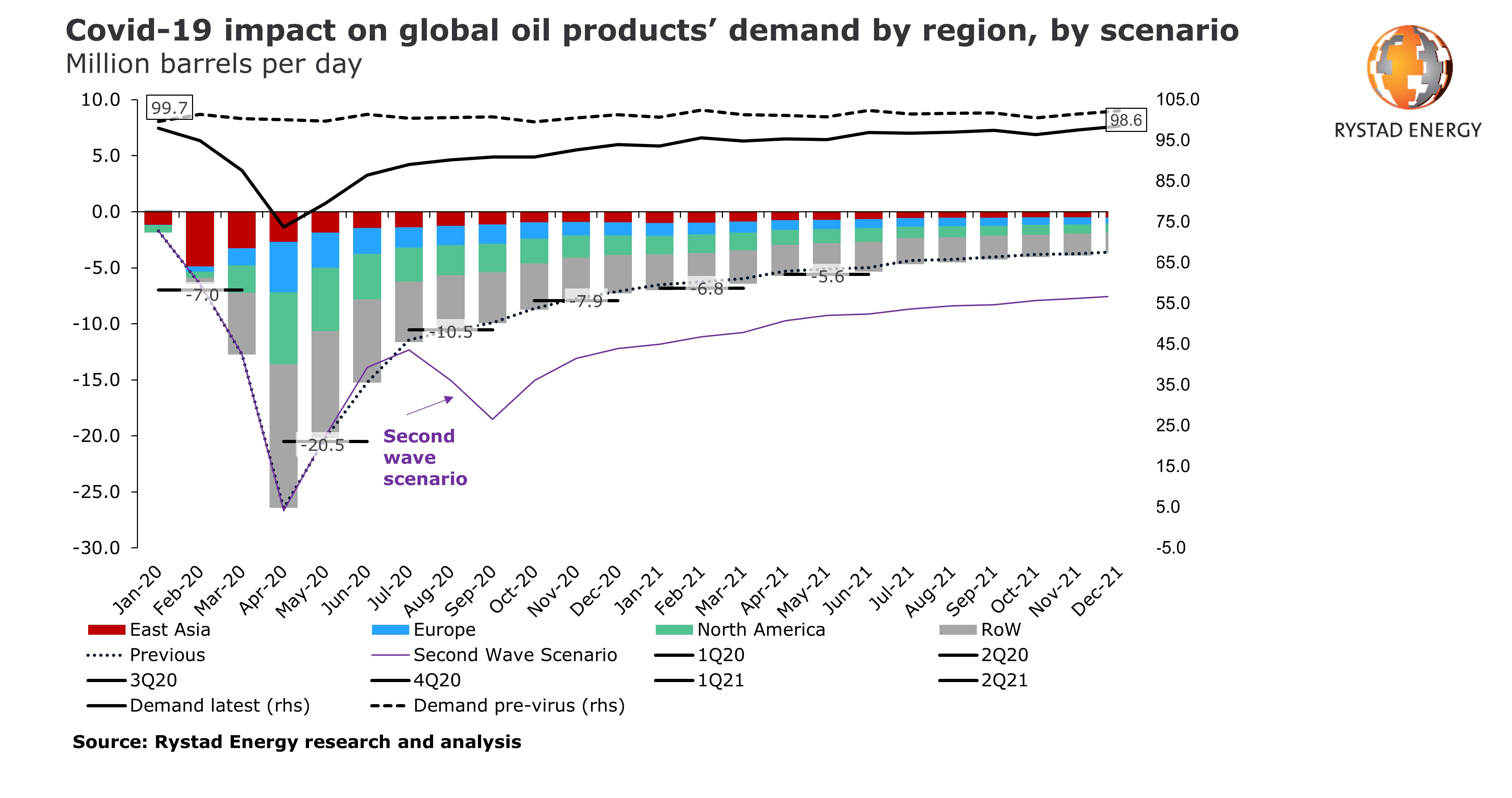
As the number of confirmed new Covid-19 cases surges to new global highs of beyond 200,000 per day, a second wave of the pandemic is increasingly apparent in several countries – most notably in the United States. Modelling the effect of a wider ‘second wave’ scenario, Rystad Energy finds that global oil demand in 2020 could be knocked down to 86.5 million bpd, compared to our current base-case estimate of 89 million bpd. In the second wave scenario, we don’t expect the oil demand impact to be as strong as was seen in the first outbreak, as restrictive measures will be limited to particular regions and sectors. We would expect these “smart lockdowns” to lower the negative demand impact, so as not to repeat the absolute low of 73.7 million bpd in April. The maximum negative demand impact in April 2020 was -26 million bpd, and the peak month in the second wave could come close to this at -18 million bpd, compared to the levels projected prior to the pandemic. We will be revisiting and updating these assumptions as data becomes available. North America (notably the lower US states), the Middle East and Southeast Asia will be hit relatively harder, Rystad Energy’s modelling shows. The rise of Covid-19 cases in the US is of particular concern for the oil market given the country’s high oil consumption under normal circumstances, as this second wave could paralyze road fuel demand. In China, the authorities’ response to the recent case resurgence in Beijing shows that re-imposing radical lockdown measures is still a viable option. “Covid-19 will also re-emerge in other regions in our ‘second wave’ scenario when the flu season starts in the northern hemisphere in September and October. In general, however, new waves of lockdowns in regions such as Europe, South America and Russia are expected to be more targeted and less strict as health systems will be better prepared than they were in April,” says Rystad Energy’s senior oil market analyst Artyom Tchen. The demand for total oil products would not be shared equally. Similar to the current status quo, jet fuel and gasoline would be dealt the most painful blows. But with more testing and smarter lockdowns, a lot of this destruction can be avoided – international borders and travel can gradually reopen, with travel restrictions on certain countries and regions being imposed as new Covid hotspots appear. More work from home (perhaps as much as 15% of the workforce in developed countries) and less leisure travel will still pinch gasoline demand. But as the economic risks mount, we believe there will be creative solutions for the healthy and not-at-risk parts of the population to return to work and keep the economy going. The second wave scenario assumes a prolonged recovery in the aviation sector due to the downside risk of such a wave occurring in the second half of 2020 and a second negative demand impact spike in all regions in the period from August to October 2020. It is in essence an expansion of a downside scenario that we previously modelled called a “mitigation scenario”. In the base-case that we use for our projections, which we call the “effective retainment scenario”, the spread of Covid-19 is plotted under the assumption that drastic social distancing measures are initially taken, which often means strict quarantines. This scenario suppresses the virus so that the number of cases drops to a low level. Governments can then reopen society in a controlled manner. Any new outbreak will be again nipped in the bud with strict measures. The difference between the two scenarios by the end of the year shows a 5 million bpd gap in December’s oil demand in the case of a second Covid-19 wave. If the second wave materializes, global oil demand will recover much more slowly in 2021, landing between 4 million and 5 million bpd lower per month than it would under our current base case, thus dragging the pandemic’s market effect further in time. Demand is still very much in the driver’s seat in setting the oil price agenda – an unexpected dip of any magnitude will send the oil price into a tailspin, whether swift and sharp, or long and painful. At this point, OPEC+ is the single supply tool to materially tighten the market, but it faces massive storage build-ups as an adversary. And if there is a second wave, that storage headache is going to greatly worsen as implied builds again rise.

A significant oil price boost cannot occur until the massive crude stock builds of recent months are neutralized. This means that oil prices will continue to carry considerable downside risk as long as the supply and demand dynamics are moving in opposing trajectories – with supply up and demand down. A second wave of the virus would prolong the timeline these products sit in storage, and signal to refineries to pull back.

If anything, the whole new range of risk factors that still lie ahead in 2020 and 2021 would actually point to more volatility and downside risk before any “flip” back into a true backwardation happens. Source: Rystad Energy.