J.P. Morgan Chase is “temporarily” closing 1,000 bank branches, or 20% of its locations, effective Thursday amid growing coronavirus concerns. Chase has sent bank staff from the branches, like financial advisors, tellers and lenders, to work from home. The remaining 4,000 branches of Chase will stay open, albeit with reduced hours, 9:30 a.m. – 4 p.m., closing early by two hours. Chase says many of the branches have glass partitions and thus, protection for tellers. These branches also may have drive-up windows. In a note to staff, Thasunda Brown Duckett, CEO of Chase Consumer Banking, said Chase will continue to pay branch employees for their regularly-scheduled hours. “Even if their hours are reduced or the branch is closed and they are asked to report to another branch or stay home.” Additionally, she added that Chase has said two additional paid days away from work and extended the time that employees may carry over vacation days from 2019 to June 20, 2020. Brown Duckett said Chase has stepped up cleaning at branches, placing alcohol-based hand sanitizer at main entrances, transaction lines and reception areas. “We will send a team of specialized cleaners if a branch has a confirmed or highly likely COVID-19 case within one hour of the report.” Bank of America said it would remain open. BofA has 4,300 locations, “and each one also has a 24/7 ATM available to clients,” notes spokesman William Halldin. According to S&P Global Market Intelligence, Chase is the largest U.S. bank, based on assets, with $2.74 trillion, followed by BofA with $2.38 trillion, Citigroup with $1.96 trillion and Wells Fargo with $1.89 trillion.
IMF’s Georgieva: COVID-19 is unprecedented situation
The COVID-19 pandemic is an “unprecedented situation where a global health pandemic has turned into an economic and financial crisis,” International Monetary Fund Managing Director Kristalina Georgieva stated on Friday. She added the global economic output will contract this year amid the coronavirus pandemic Georgieva also noted that the IMF will come up with more lending options to help the “exceptionally high number” of states that will need economic assistance. The IMF head went on to add the organization will work closely with the International Monetary and Financial Committee and the World Bank. Additionally, she added: “The IMF stands ready to use its US$1 trillion financial capacity to support its member countries.”
Trump: Delay of stimulus would be dangerous and costly
This Could Be You – You need to take this seriously
US jobless claims surge to record 3.3M amid COVID-19 pandemic
An unprecedented number of Americans applied for unemployment benefits last week as the coronavirus shuttered businesses nationwide. m,Roughly 3.3 million people filed a claim for jobless aid in the week ending March 21, a nearly fivefold increase over the previous weekly record back in 1982. By way of comparison, in the worst single week after the financial crash of 2008, jobless claims stood at 665,000. “This represents the single worst one-day piece of labor market news in America’s history,” Andrew Stettner, senior fellow at the Century Foundation, said in an email.
The number of Americans seeking jobless aid “starkly illustrates the extent of the economic devastation that the coronavirus has unleashed,” Paul Ashworth of Capital Economics said in a note to investors. For perspective, the unemployment claims reported Thursday wipe out all the job gains for 2019 and half of 2018. And as staggering as the figures are, they are likely to rise in the coming weeks, Ashworth noted. The deluge in claims has overwhelmed many state websites, preventing many recently laid-off workers from applying for financial assistance. Ashworth added that he expects the nation’s unemployment rate, which was at a 50-year low of 3.5% in February, to top 10% as soon as next month.
Treasury Secretary Steven Mnuchin dismissed the jobless claim figures on Thursday, saying they were “not relevant” because U.S. lawmakers were on the cusp of passing a significant economic stimulus bill. The package would give unemployed workers their full pay for four months, expand benefits to independent contractors (who are typically exempt) and send direct payments of up to $1,200 to every adult.
The package also includes hundreds of billions of dollars in loans to businesses, and aid for hospitals and state and local governments.
House to vote on $2T stimulus bill on Friday
House Majority Leader Stany Hoyer announced late on Wednesday the COVID-19 funding bill worth $2.2 trillion will be considered by the lower house on Friday. Additionally, he informed Congress members under coronavirus quarantine measures and others unable to make the vote, they needn’t come as the bill is expected to pass the House of Representatives by a voice vote. The stimulus bill was approved by the Senate earlier after House Majority Leader Chuck Schumer and Senate Republican Mitch McConnell previously reached an agreement on the relief package.
US Senate approves $2T COVID-19 stimulus bill

United States Senate has passed the $2 trillion coronavirus relief bill 96-0 late on Wednesday in an effort to negate the effects of the coronavirus crisis. The legislation, almost 900 pages long, includes direct payments to American citizens, enhanced unemployment insurance, affordable loans to businesses affected by the outbreak and significantly increased health care resources for hospitals. After the proceedings are finished, the Senate will be going on holidays until April 20. Meanwhile, the House of Representatives is set to open discussion and eventually vote on the legislation on Friday morning.
Three senators insist COVID-19 bill is fixed fast
Three Republican members of the United States Senate issued a statement on Wednesday saying a “massive drafting error” in the current version of the $2 trillion COVID-19 emergency relief bill needs to be fixed before adoption to save jobs.
South Carolina senators, Tim Scott and Lindsey Graham and Nebraska Senator Ben Sasse wrote: “Unless the bill is fixed, there is a strong incentive for employees to be laid off instead of going to work.” They added they will oppose fast-tracking the bill until changes are made to the text or “until the Department of Labor issues regulatory guidance that no American would earn more by not working than by working.”
Earlier, Majority Leader Mitch McConnell stated that the bill would pass the Senate later in the day.
Airline promises to pay passengers £7k if they catch coronavirus on flights
A controversial airline has announced it will pay customers up to £7,000 if they catch coronavirus while flying with them. Vietnamese carrier Vietjet has introduced its new “Sky Covid Care” insurance scheme as a way of protecting customers during the current global pandemic. Under the policy, if a passenger contracts COVID-19 while traveling on a Vietjet flight, they will be eligible for a payout of up to 200 million Vietnamese dong (£7,085). The payout is applicable for all domestic flights in Vietnam between now and June 30, and applies to all eligible customers free of charge and regardless of their nationality. Any passengers who have already tested positive to the virus and those who fail to follow recommended safety regulations, such as self-isolation or travel bans, will not be eligible for the payout. Passengers with epilepsy or mental illness are also not eligible for the scheme.
GOP and Dems reach deal on $2T COVID-19 bill
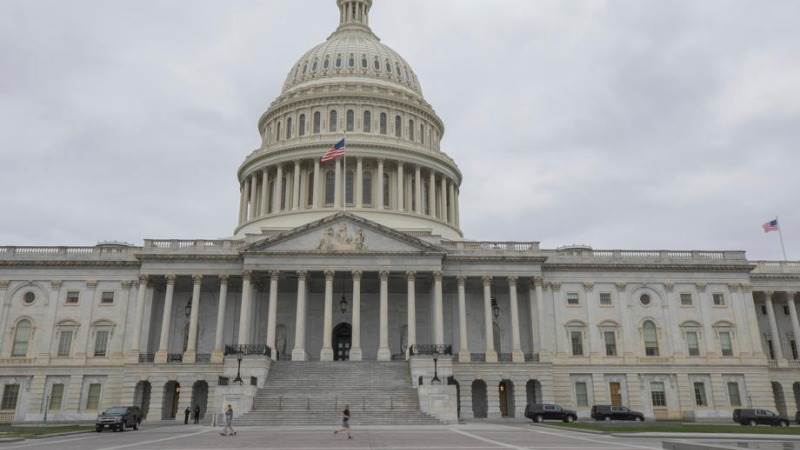
WASHINGTON (AP) — The White House and Senate leaders of both parties announced agreement early Wednesday on unprecedented emergency legislation to rush sweeping aid to businesses, workers and a health care system slammed by the coronavirus pandemic.
The urgently needed pandemic response measure is the largest economic rescue measure in history and is intended as a weeks- or months-long patch for an economy spiraling into recession and a nation facing a potentially ghastly toll.
Top White House aide Eric Ueland announced the agreement in a Capitol hallway shortly after midnight, capping days of often intense haggling and mounting pressure. It still needs to be finalized in detailed legislative language. “Ladies and gentlemen, we are done. We have a deal,” Ueland said. The unprecedented economic rescue package would give direct payments to most Americans, expand unemployment benefits and provide a $367 billion program for small businesses to keep making payroll while workers are forced to stay home. One of the last issues to close concerned $500 billion for guaranteed, subsidized loans to larger industries, including a fight over how generous to be with the airlines. Hospitals would get significant help as well. “After days of intense discussions, the Senate has reached a bipartisan agreement on a historic relief package for this pandemic,” said Majority Leader Mitch McConnell, R-Ky., a key negotiator. “It will rush new resources onto the front lines of our nation’s health care fight. And it will inject trillions of dollars of cash into the economy as fast as possible to help Americans workers, families, small businesses and industries make it through this disruption and emerge on the other side ready to soar.” At the White House on Tuesday, even as the public-health crisis deepened, President Donald Trump expressed eagerness to nudge many people back to work in coming weeks and held out a prospect, based more on hope than science, that the country could be returning to normal in less than a month. “We have to go back to work, much sooner than people thought,” Trump told a Fox News town hall. He said he’d like to have the country “opened up and just raring to go” by Easter, April 12. But in a White House briefing later, Trump said that “our decision will be based on hard facts and data.” The World Health Organization says the U.S. could be the next hot spot for Covid-19 Dr. Anthony Fauci, the government’s top infectious disease expert, said pointedly at the briefing, “No one is going to want to tone down anything when you see what is going on in a place like New York City.” On Capitol Hill, five days of arduous talks produced the bill, creating tensions among Congress’ top leaders, who each took care to tend to party politics as they maneuvered and battled over crafting the legislation. But failure was never an option, which permitted both sides to mark big wins.
Even before the deal was reached, news of the likely but elusive agreement had sent the stock market rocketing on Tuesday. The emerging rescue package would be larger than the 2008 bank bailout and 2009 recovery act combined.
Continue reading “GOP and Dems reach deal on $2T COVID-19 bill”