Deadly new Covid variant could kill one in three people, warns SAGE

Mutant strain could lead to a return to tighter restrictions and lockdowns, while delivering another huge economic blow to the country

A new variant of Covid that kills one in three people is a “realistic possibility”, scientists have warned. A report by SAGE – the Scientific Advisory Group for Emergencies – says the future strain of coronavirus could be as deadly as MERS. MERS (Middle East Respiratory Syndrome) is caused by another type of coronavirus and kills 35 per cent of those it infects. It was first recorded in Saudi Arabia in 2012. And science advisors to the Government fear that a new version of the Covid-19 virus could be just as much of a threat. Mutations are most likely to occur when the virus is widespread – as it is currently in the UK. The emergence of such strains could lead to a return to tighter restrictions and lockdowns, while delivering another huge economic blow to the country, Scientists suggested the new strain could be resistant to vaccines if it evolved from the jab-resistant ‘South Africa’ Beta variant along with the more transmissible Alpha or Delta variants.

Dr Philippa Whitford, vice-chair of the All-Party Parliamentary Group on Coronavirus, urged those in charge to pay attention to the alarming report

“This report, which should have sent shock waves through the UK Government, was instead quietly snuck out among a glut of reports during parliamentary recess,” she told Mail Online. “Recommendations and comments made by SAGE bring home the simple reality — that we have not yet ‘defeated’ this virus.” In another report, scientists warned that the protection offered by vaccines against coronavirus infection and potentially severe disease is likely to diminish over time. As a result, vaccine campaigns will have to continue for years to come.

The document, titled “How long will vaccines continue to protect against COVID?”, was written by prominent virologists and epidemiologists from Imperial College London, University of Birmingham and Public Health England.

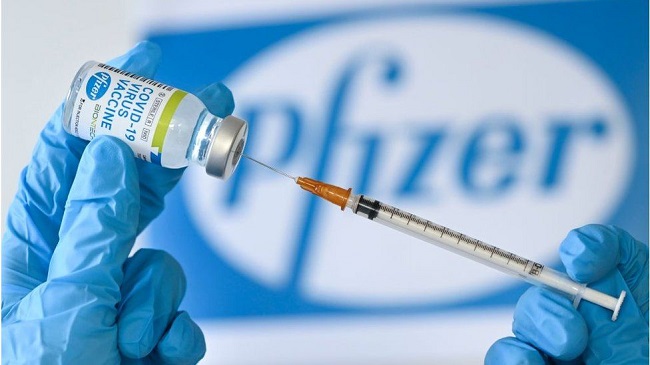
Britain has approved and is using three vaccines – Oxford-AstraZeneca, Pfizer-BioNTech and Moderna – in a programme that started in December 2020. Data shows that these vaccines protect with 95 per cent or greater effectiveness against the Alpha variant that dominated in Britain in early 2021, the scientists said, although the ability of the shots to protect against infection and onward transmission was lower. They said it vaccines could remain effective against severe disease but effectiveness against mild disease and infection could fall off over time. Anecdotal reports from Britain and Israel, which rolled out a comprehensive early campaign, supported that concept, they said. France, Israel. Germany and Great Britain will begin offering a third shot of the Pfizer-BioNTech COVID-19 vaccine to people aged over 60, a world-first in efforts to slow the spread of the highly contagious Delta variant.
FTSE 100 slips as virus fears outweigh gains in travel stocks

https://youtu.be/JcMTI-0gFhs

London’s FTSE 100 slipped on Tuesday as fears over a spike in global COVID-19 cases dented optimism about strong corporate earnings, while Flutter Entertainment jumped after saying it expected its U.S. business to turn a profit by 2023. The blue-chip FTSE 100 inched 0.1% lower as gains in travel and leisure stocks were outweighed by weakness in heavyweight banks, which tracked benchmark bond yields lower. Travel stocks have gained nearly 12% since the UK eased lockdown restrictions on July 19. The industry has been among the top sectoral performers this month on optimism travel demand would pick up pace, but still underperforms the mid-cap and blue-chip indexes. “The outlook for travel and leisure stocks is kind of mixed at the moment, with most shares clocking gains but still being off their highs due to rising uncertainties regarding the Delta variant,” said Michael Hewson, chief market analyst at CMC Markets. The domestically focussed mid-cap index climbed 0.3% with sports goods retailer Frasers being the top gainer, as surveys showed sporting events and the summer holidays prompted a big increase in British consumer spending in July. The FTSE 100 has gained 10.4% so far this year on re-opening optimism and record-low interest rates, but a recent jump in global coronavirus infections and rising inflation have spurred worries that central banks could pull back support sooner than expected. Among stocks, British insurer and asset manager M&G dropped 1.4% to the bottom of the FTSE 100 even after it posted an above-forecast 6% rise in first-half operating profit and said it was on track to meet its end-2022 capital generation target.

U.S. CDC advisers to review data on COVID-19 vaccine boosters

(Reuters) – A U.S. Centers for Disease Control and Prevention (CDC) advisory panel will meet on Friday to discuss considerations for booster doses of COVID-19 vaccines, as the United States deals with increasing cases from the Delta variant of the coronavirus. The meeting of CDC’s Advisory Committee on Immunization Practices will also discuss updates on additional doses in immune compromised individuals.Lat month, top U.S. infectious disease expert Anthony Fauci said Americans who are immune compromised may end up needing COVID-19 vaccine booster shots.

Wall Street closes mostly lower on Delta strain risks

Major stock markets in the United States closed the trading session on Monday mostly with losses as investors weighed the risks posed by the rapid spread of the Delta variant. The number of job openings increased to a series-high in June as the rate climbed to 6.5%. Federal Reserve official Raphael Bostic said he expects asset tapering to start in the October-December period of this year, however, the positive jobs report could expedite the matter. Additionally, Fed’s Tom Barkin noted that the high inflation has already hit the 2% requirement for raising interest rates and the Delta strain hasn’t yet impacted the demand. Meanwhile, the drop in oil prices pulled back some energy companies, along with tourism-related entities.The Dow dropped by 0.30% as International Business Machines fell by 1.97%, while the S&P 500 closed with 0.09% in the red with Air Products & Chemicals losing 5.18%. The Nasdaq 100 grew by 0.16% led by Moderna gaining 17.10%. The euro slid by 0.20% against the dollar to sell for $1.17380 at 3:56 pm ET.

Delta variant concern could slow economic recovery, Fed’s Kashkari warns

The coronavirus delta variant has already led some officials to reinstate mask mandates, but Minneapolis Federal Reserve President Neel Kashkari warns that it could also hinder the economy’s comeback. In an interview with CBS’ “Face the Nation,” Kashkari observed that the more transmissible delta variant is breeding “caution” among Americans, which has contributed to hesitancy when it comes to going back to work. “I was very optimistic the fall would be a very strong labor market with many of those Americans coming back to work,” he said. That’s still my base-case scenario, but if people are nervous about the delta variant, that could slow some of that labor market recovery and therefore be a drag on our economic recovery. So the sooner we can get people vaccinated – the sooner we can get delta under control – the better off our economy’s going to be.” Kashkari noted that in addition to caution about contracting the illness, there are more indirect factors behind people not returning to work. These, he said, include having issues with child care as well as enhanced unemployment benefits. Those benefits, Republicans have warned, have led to a lack of motivation to return to work because in some cases the benefits pay more than the jobs people had. Republicans have urged the administration to end the enhanced benefits, which provide an extra $300 per week. It is set to expire Sept. 6. In May, Biden warned that people who turn down job offers could lose their benefits. So far, 26 states have opted out of the enhanced benefits and require people collecting unemployment to look for work. National Economic Council Director Brian Deese was more optimistic, telling “Fox News Sunday” that “jobs are plentiful and wages are going up” while almost 70% of American adults have received at least one vaccine dose. “We have to stay vigilant, we have to stay focused, but we, our economy, and this recovery are strong, and there’s durable momentum in the economy, we just have to keep that going,” Deese said. Kashkari also addressed recent inflation, admitting that “it was greater than I thought” but maintaining that he still believes it is temporary because it is not a broad inflation across the entire economy. Still, he said, “We’re paying very close attention.” He did say supply chain problems that have impacted a number of industries have been an inflation concern, but he was optimistic that these problems will “get worked out.” He cited a reduction in lumber prices after they had spiked and a temporary toilet paper shortage earlier in the pandemic. Kashkari said many of the supply chain issues were just “the market at work as businesses are trying to work out their issues and become more efficient,” he said.

Moderna Admits vaccine wears off after 6 months and booster shots will be necessary

Moderna Co-founder and Chairman Noubar Afeyan discusses the progress the vaccine developer has made in the battle against Covid-19 and the different variants that have been emerging. He also talks about whether booster shots will be necessary and vaccine supply shortages.

Why is the company recommending a third dose?

Despite just over 50% of the US population vaccinated, there has been a worrying rise in cases driven by the Delta variant of covid-19. The new variant is much more infectious than previous variants. It has forced some states to reimpose some restrictions and others to impose vaccine mandates on federal workers. As the country heads towards winter, where more of the population will be indoors, there will be a higher risk of infection in comparison to the summer.

— Julie Leask (@JulieLeask) August 3, 2021

For those whose vaccines were administered at the beginning of the year there could be a risk by the fall that they have lost some of their effectiveness. This could in turn lead to what are called ‘breakthrough cases,’ where people are reinfected with covid-19 but at a stage that could put their health seriously at risk. Moderna posted new information as part of its second-quarter earnings release where it claimed a third dose may be needed as the Northern Hemisphere heads into winter. The company said both a third shot of the original vaccine and new versions have demonstrated “robust antibody responses to COVID-19 variants of concern.” Tests for a third jab reportedly give the same level of protection as someone who received the original two does for the first time. The information has been submitted to a peer-reviewed journal.

Alarm as US Covid cases above 100,000 a day for first time since February

https://youtu.be/Bgyca3SHnbo

Seven-day hospital admissions average up 40% from last week

Daily Covid-19 cases in the US moved above 100,000 a day for the first time since February, higher than the levels of last summer when vaccines were not available, and came as health officials sounded alarm over lagging rates of vaccination driving the surge of the infectious Delta variant. The seven-day average of hospital admissions has also increased more than 40% from the week before, with health workers describing frustration and exhaustion as hospitals in Covid hotspots were again overwhelmed with patients, almost 20 months into the pandemic in the US. “As we look at our hospitalizations and as we look at our deaths, they are overwhelmingly unvaccinated people,” CDC director Rochelle Walensky said at a briefing on Thursday. About half of all new infections and hospitalizations in the past week were in seven southern states Florida, Texas, Missouri, Arkansas, Louisiana, Alabama and Mississippi – even though the states represent less than a quarter of the country’s population, said White House coronavirus coordinator, Jeff Zients. In Mississippi on Thursday, there were 3,164 new confirmed cases, the second highest single-day caseload in the state during the pandemic. “We’re seeing a phenomenal increase in daily reported cases of Covid, and this is entirely attributable to the Delta variant, which is sweeping over Mississippi like a tsunami,” said state health officer Thomas Dobbs. The entire state had just eight ICU beds available on Thursday, officials said, and more than 1,147 people were hospitalized with Covid-19. Nichole Atherton, an intensive care nurse in Mississippi, told Reuters she was planning to resign from her hospital and find nursing work elsewhere because she couldn’t stand watching Covid’s toll on her community. “The first wave was heartbreaking, because there was nothing people could do except stay away from the people they love,” Atherton said about infections last year before vaccines were developed. “This time, there are options.” Three people have messaged her to say they will get vaccinated, Atherton said. At a White House coronavirus briefing on Thursday, officials said as cases surge, efforts were focused on communities with low vaccination rates, which are driving the pandemic. “Across the board, we are seeing increases in cases and hospitalizations in all age groups,” said Walensky. Walensky said the CDC had reported more than 103,400 new cases of Covid on Wednesday, and that the seven-day average for cases was about 89,463 per day. One bright spot is vaccination rates are now increasing again across the US. White House data director Cyrus Shahpar said that on Wednesday there were more vaccinations in a single day than since 3 July, with 864,000 new doses reported administered. Of those, 585,000 were first shots. Of the three vaccines approved for emergency use in the US, Johnson & Johnson only requires one shot, Pfizer and Moderna’s vaccines need two shots several weeks apart, and all three give strong protection. Some of the same states responsible for the increase in cases are also picking up the vaccination pace. The White House said Tennessee has seen a 90% increase in first shots over the past two weeks. Oklahoma saw an 82% increase and Georgia saw a 66% percent increase. “The unvaccinated continue to be the big highway of transmission,” William Schaffner of Vanderbilt University Medical Center told CNN. “So the unvaccinated continue to be the big highway of transmission. The vaccinated, they’re little side streets. Let’s not get preoccupied with that. We need to get more people vaccinated.” A growing number of companies are requiring employees get the Covid-19 vaccine. United on Friday became the first major US airline to require all employees get vaccinated. And defense secretary Lloyd Austin is expected to soon order vaccines mandatory for the military. More than a million service members are fully vaccinated of the roughly two million active-duty, guard and reserve troops, according to the Associated Press. Meanwhile, hospitals are fighting to get financial help from state and federal officials. The Federal Emergency Management Agency (Fema) provides funding to help cover some Covid-related costs at hospitals. But state officials in Texas are denying funding requests from hospitals as cases surge across the state, after providing $5.39bn earlier in the pandemic, which was reimbursed by Fema, according to local news channel WFAA. Click the link below to Go to our store.

CLICK HERE TO ENTER

COVID-19 Rapid Tests: A Milestone in Fight Against the Pandemic

The FDA granted emergency authorization to over-the-counter antigen COVID-19 test for fully at-home usage. Test in the privacy of your home results in15
  • The FDA has approved the Abbots BinaxNOW home covid-19 taken without a prescription and produces results — in about 15 minutes — without the need to either mail in a sample to a lab or wait in line for a clinic.
  • Michael Mina, an epidemiologist at the Harvard T.H. Chan School of Public Health, believes if just half the U.S. population were able to test themselves every four days, the country could quickly achieve vaccine-like “herd immunity” by letting people know in real time when they were contagious.
  • “Scale these tests up, get these into everyone’s home, put these at the door of a restaurant, put these at the door of a gym,” Mina said in a press call “We change the balance.”

What Mina is suggesting is similar to the daily COVID-19 testing carried out by the NFL and other professional sports leagues — which is meant to regularly sweep for infections before they lead to outbreaks — albeit on a much larger scale. Rapid antigen tests can cost as little as $15,per test entirely at-home. They take lab test out of the picture. Nick Note: We have purchased 1000 of these test kits. And have less then 300 kits left in stock ready for immediate delivery. They are selling FAST and 3 suppliers have put us on back order. We have a special offer. Order ten kits and receive our CornaVit supplement or our ULPA filter and half mask as a free bonus.

ORDER NOW

CLICK HERE for BinaxNow Brochure

CLICK HERE for CoronaVit Brochure

Hospital workers overwhelmed as delta variant spreads across US

Hospitalizations have grown from 12,000, a month ago, to more than 61,000 now, as states like Mississippi say the contagious variant is sweeping over them “like a tsunami.” With coronavirus infections on the rise again in the U.S., hospitals across the country are trying to meet the needs of thousands of patients who are testing positive for COVID-19, and are in need of medical care. One state that has seen a rapid increase in COVID-19 cases and hospitalizations has been Nevada, where case levels have swelled by nearly 200% in the last month, the state’s highest level since February, according to the U.S. Centers for Disease Control and Prevention. “Basically, we’re reliving 2020 in 2021,” Dr. Angie Honsberg, medical director for the intensive care unit at University Medical Center told ABC News. “We, unfortunately, are back to having a very high number of COVID patients. We have had a break for the last two and a half months and unfortunately, now we’re back to feeling like we were back in January in February when close to half of our ICU was critically ill patients with COVID respiratory failure.” Since mid-June, the average number of patients being admitted to the hospital each day with COVID-19 in Nevada has tripled, according to the CDC. This marks the highest number of patients seeking care in more than five months. “The current group of patients seems to get sick quicker than the patients that we saw with the earlier COVID outbreak and we’re also seeing, for the most part, a younger group of patients,” Honsberg said. Some of the patients have very severe pneumonia, Honsberg added. A similar message is conveyed by Robin Ringler, charge nurse in UMC’s Medical ICU, who said that the patients she is seeing in the ICU are very sick, many struggling to breathe, and on ventilators. In fact, she said, some of these patients are so sick “that the doctors currently are talking about doing tracheostomy on them, and that is going to keep them on the ventilator for prolonged periods of time because they cannot breathe on their own.” Ringer’s team is now anticipating more COVID-19 ICU admissions, with a growing number of COVID patients appearing in the emergency room.

“In the last two weeks, we’ve had a real increase in COVID infections in the hospital. Our COVID numbers have gone up so high. They’ve almost, I think they quadrupled from two weeks ago,” Ringler said. “The number of patients seeking treatment has been getting higher every week.”

The increases are a discouraging development, said Ringler, when vaccines were introduced, and cases began to decline, her team thought they may have been finally out of the woods. Nick Note: It’s a lot worse then they are telling you. Save Your Life (Salvavida) Mask up, Vitamin up, Isolate up, Test up, We can help you now vitamins, test kits and masks are on giveaway. FREE Bonuses galore in our store.

ORDER NOW